Murano glass furnace in Venice
Murano glass blown and hand-shaped while hot, one creation at a time. Bespoke chandeliers, pendants and wall lights, born in a furnace in Venice.
Here glass takes on colour and shape.
A furnace in Venice where every Murano glass creation is born by hand, blown and shaped while hot, to last.
Furnace, workshop and assembly under one roof
Six turns, one fire.
Everything under one roof. Murano glass goes into the glowing furnace and leaves our workshop in Venice already crated, ready to ship: in between, six stages.
Glass is born at 1,100 degrees
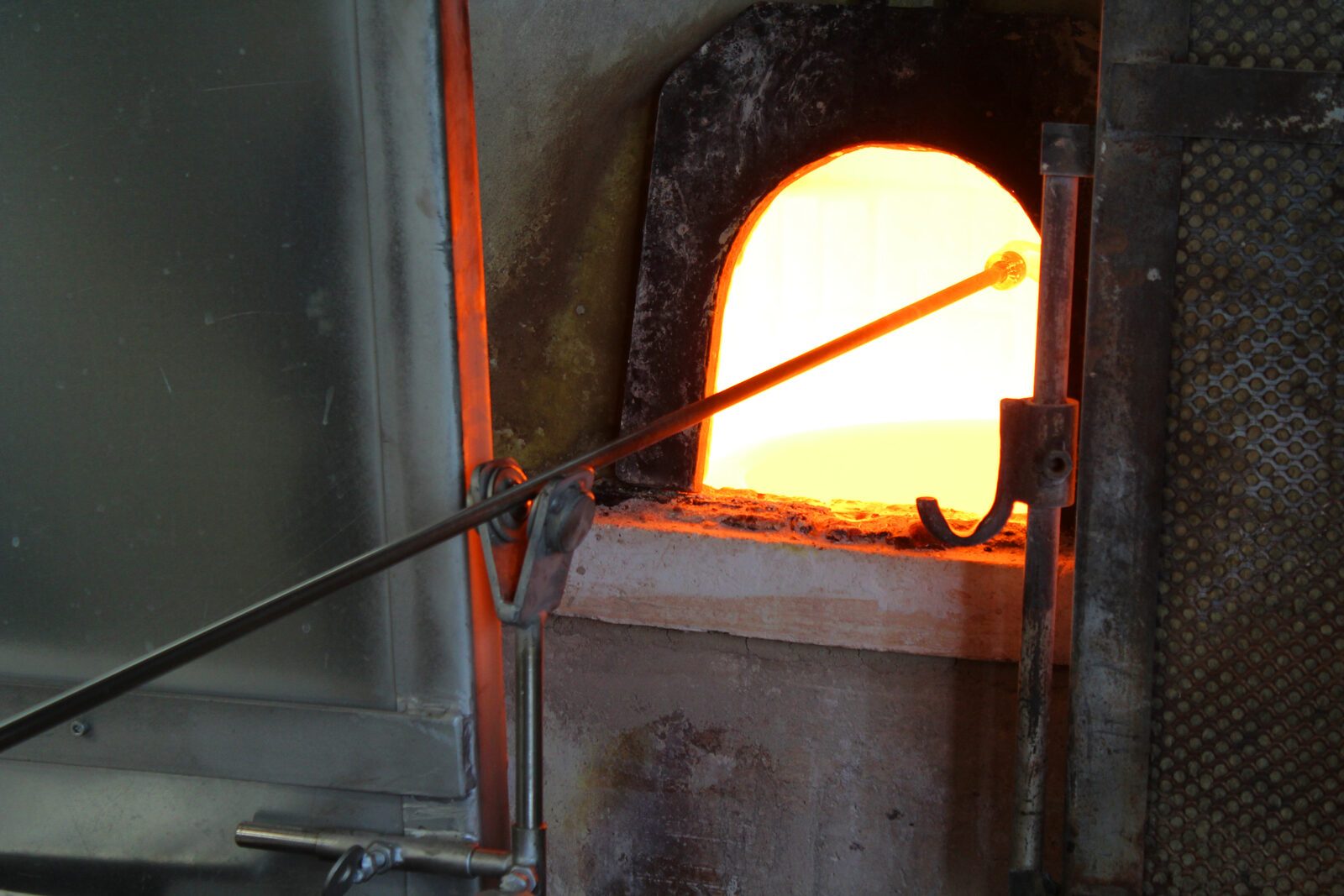
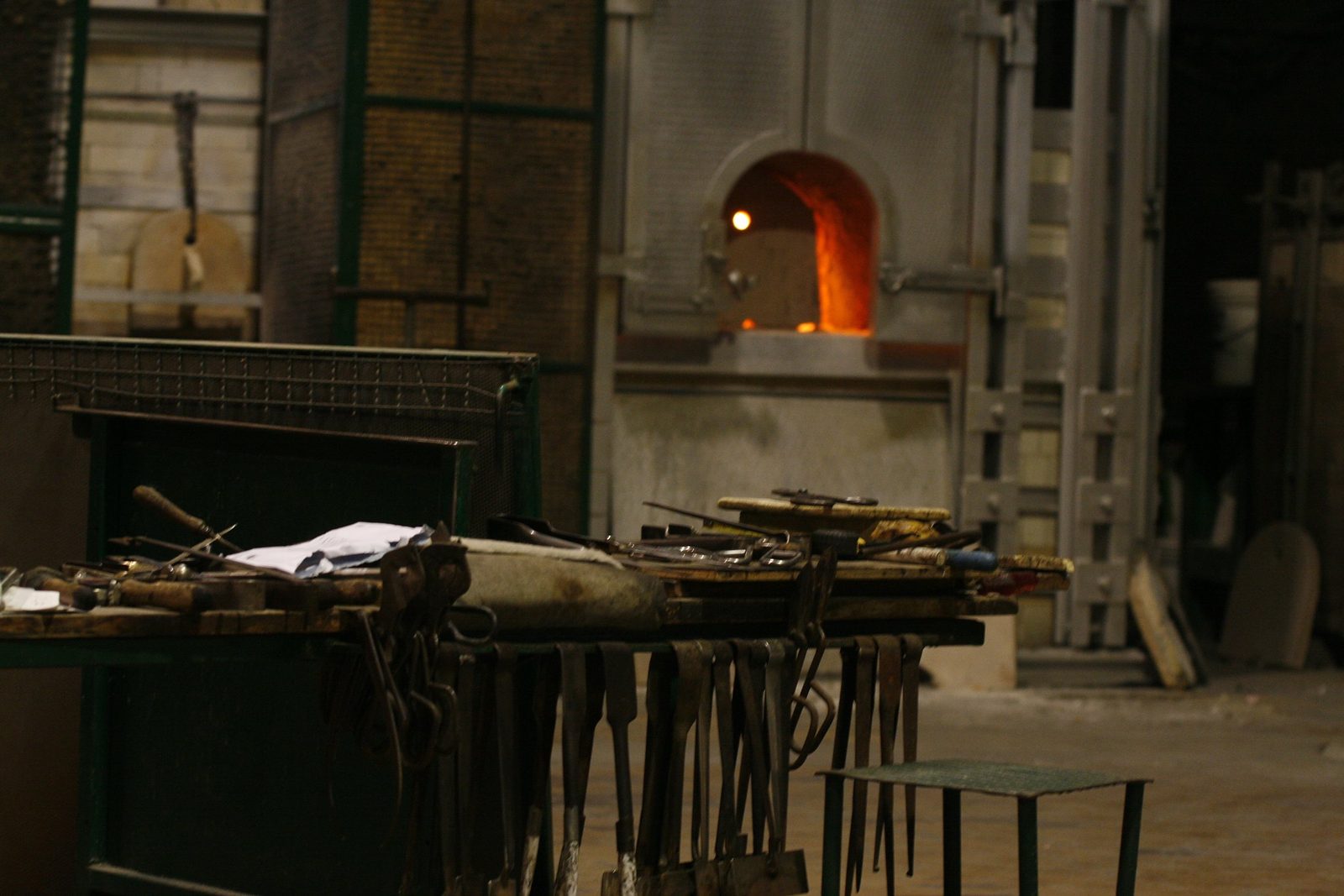
The melting furnace stays lit day and night. Silica, soda and stabilisers become a glowing, limpid mass: Murano glass in its liquid state, ready to be gathered. Temperature and refining time decide the clarity of everything that follows. Every chandelier we make passes through here.
Colour goes into the mass
Colour is not a coating: it is inside the glass. Oxides and coloured pastes go into the glowing mass, or the glass is layered to give transparency and opacity. Twenty-five transparent shades, three opaque, four in paste: each with its recipe and its own character in the fire.
See the 39 shades on the Palme chandelierShape is born in front of the furnace
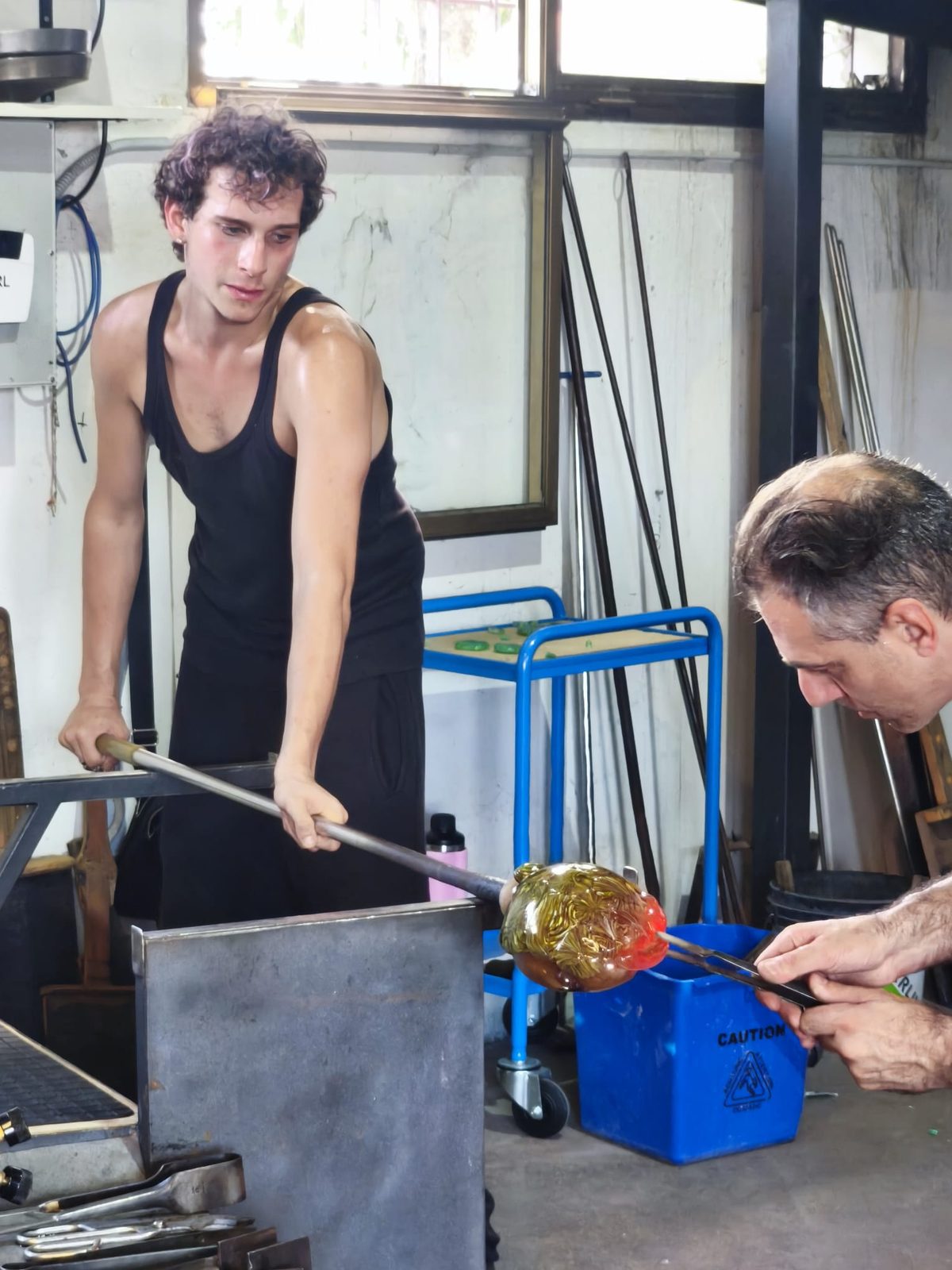
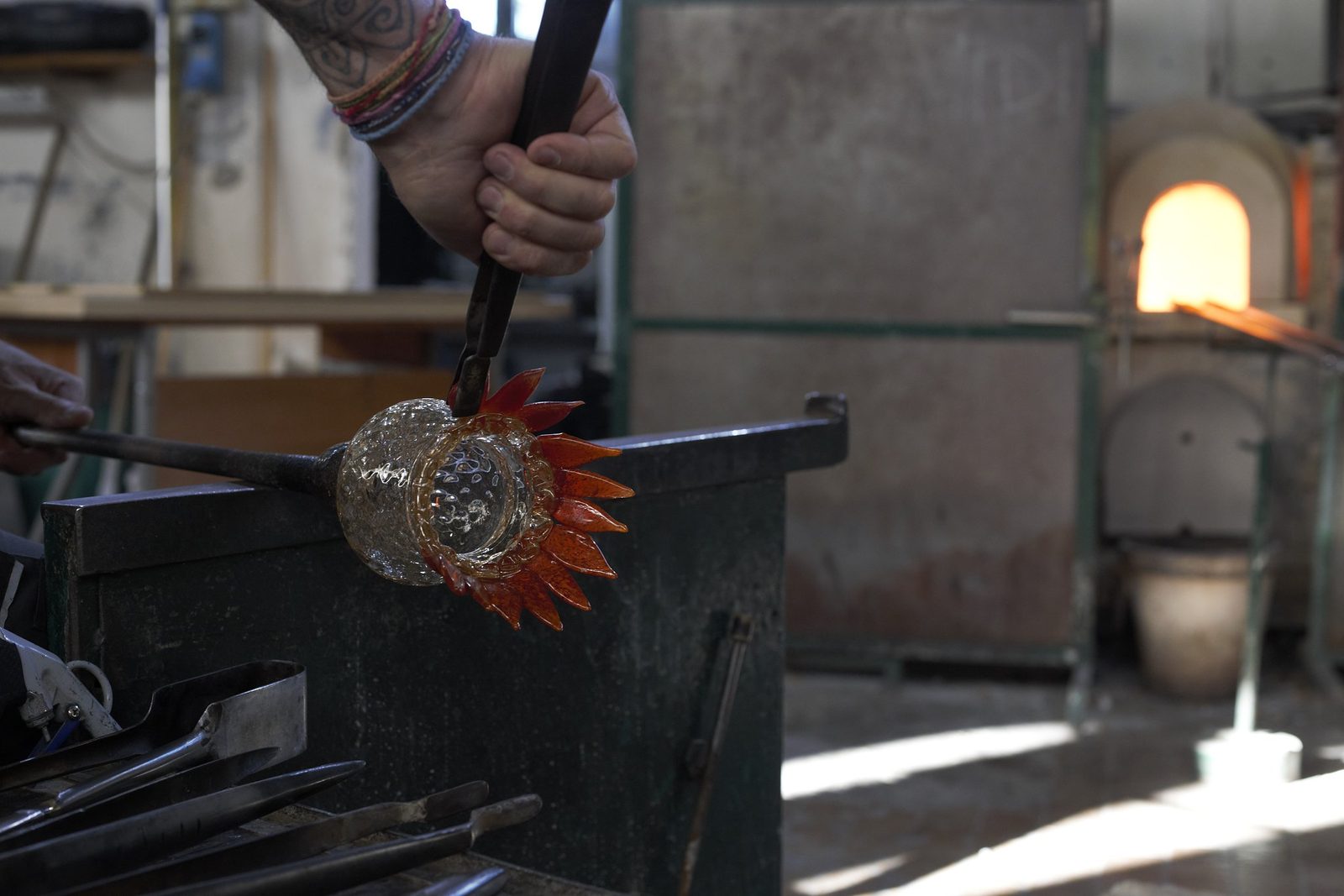
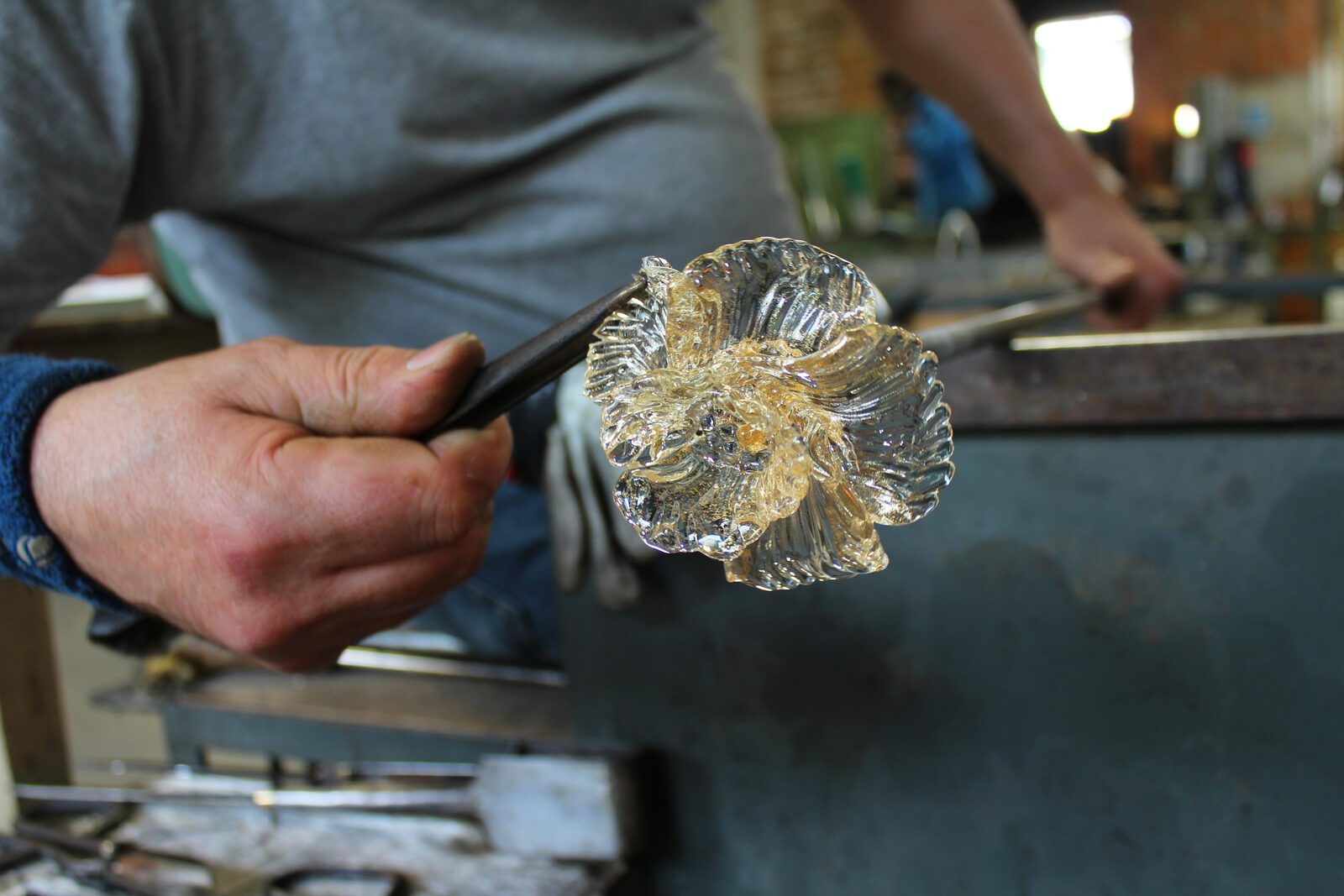
The glass is blown and shaped while hot, element by element: cups, arms, leaves, flowers, drops. Jacks, shears and wet wooden blocks guide the material in the few minutes it stays malleable.
The fire seals, the wheel refines
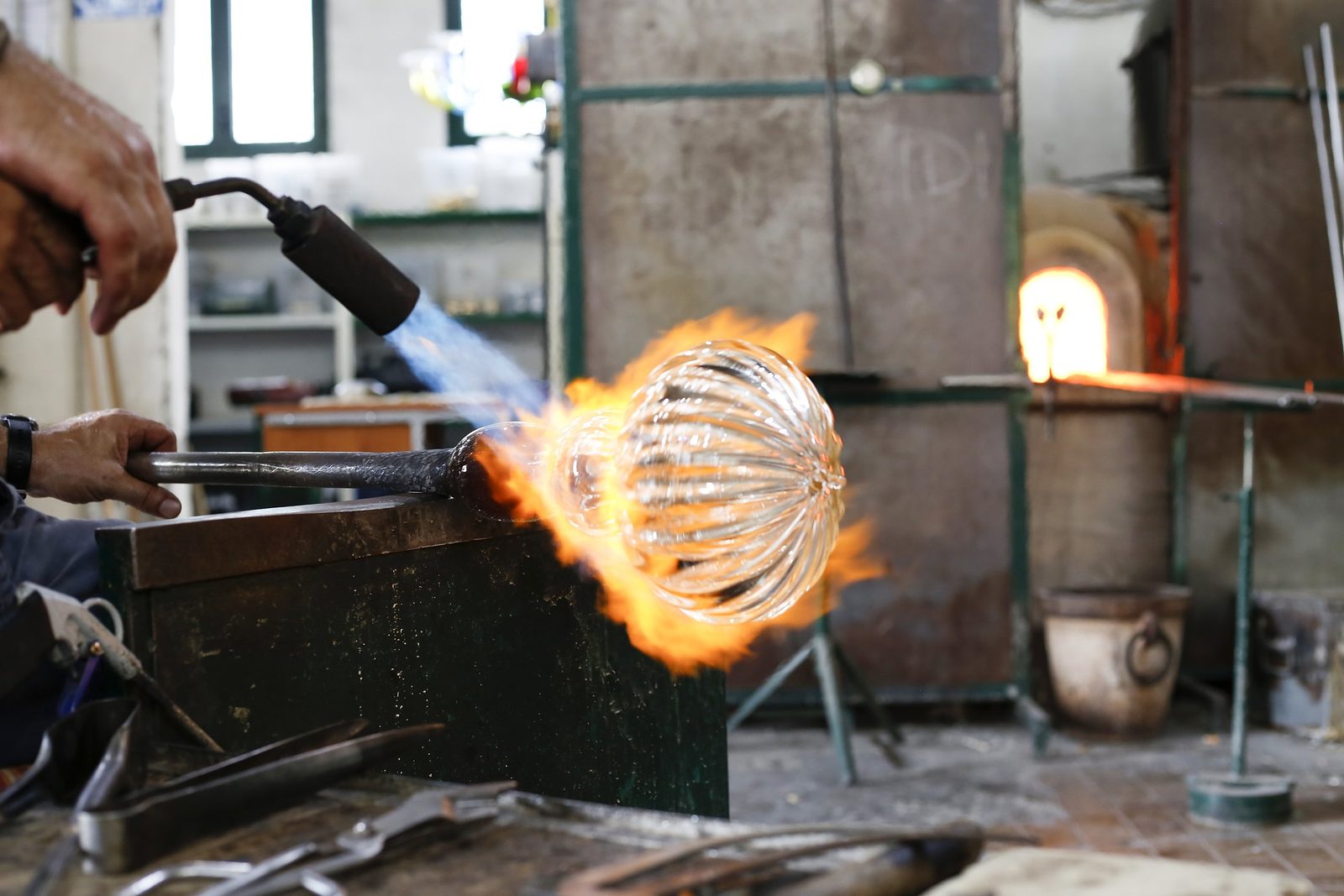
After slow annealing, which releases stresses and fixes colour and transparency, every element is ground, drilled for the wiring and polished. Where needed, the glass goes back to the flame to close a detail or refine a tip.
Every piece of glass passes through a hand
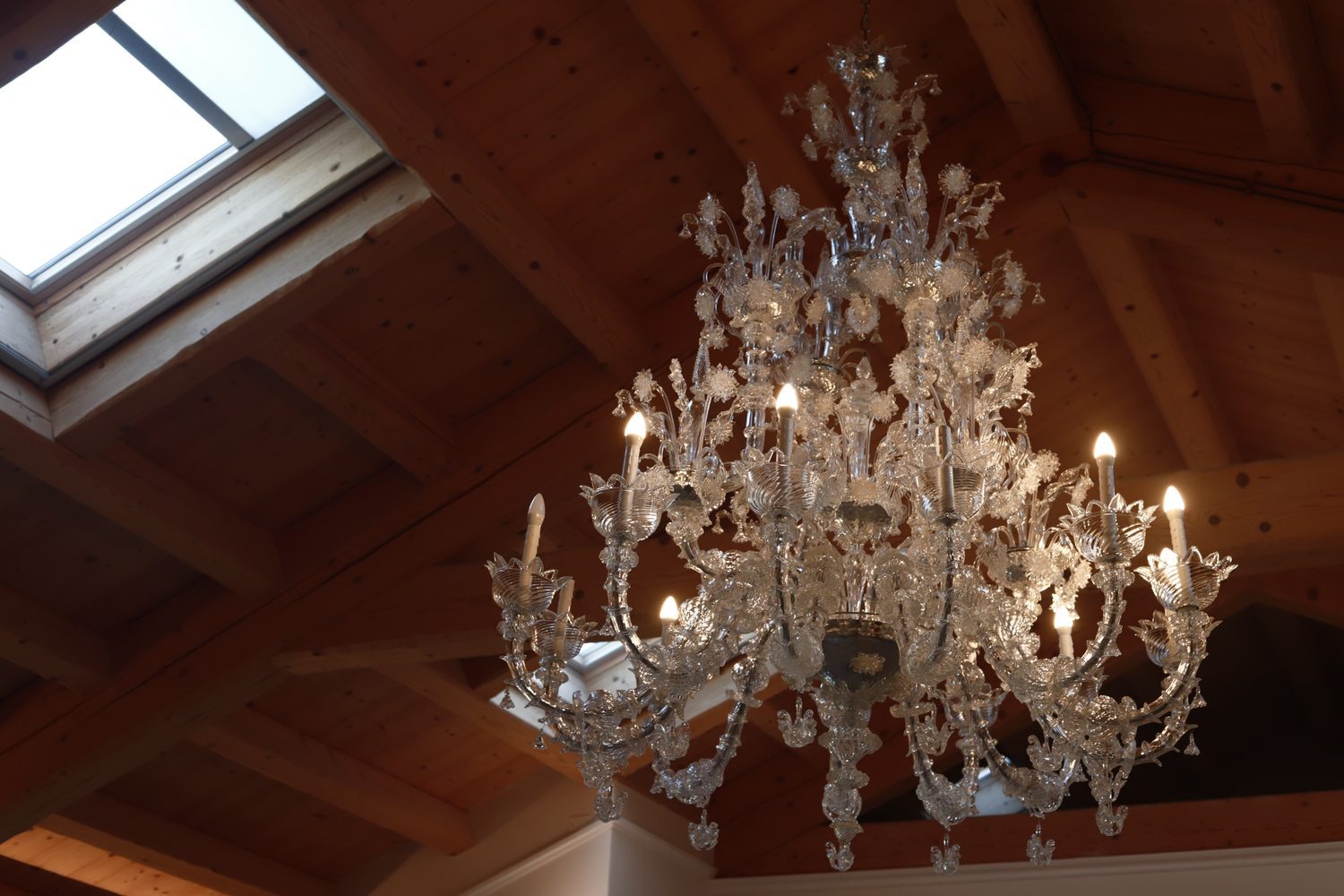
Every piece of glass is checked one by one — clarity, colour, integrity, harmony with the other elements — before assembly. The frame is assembled and wired in our workshop, with components certified for the destination country. The metal serves the glass: light, discreet, made to disappear once the light is on.
From the furnace to your door
Packing is done by hand in our workshop, made to measure for each creation; for delicate or intercontinental shipments we build wooden crates. We ship worldwide, with export documentation and installation support.
A furnace in Venice, on the mainland.
We are in Marcon, a few kilometres from Venice and the island of Murano: the same tradition, the same masters, the same colours, with room for large chandeliers.
The furnace can be visited by appointment, to watch the glass take shape and handle the samples yourself.
How a bespoke creation is born.
Every model in the catalogue is a starting point: dimensions, number of lights, colours and metal finish adapt to the space. The path is always the same, from the first request to the light switched on.
Tell us about the space
Dimensions, ceiling height, style, budget. A few photos and a floor plan, even hand-drawn, are enough.
From you · one dayWe reply with a proposal
Model, dimensions, colours, finishes, price and production time. All in writing, before you decide.
From us · a few days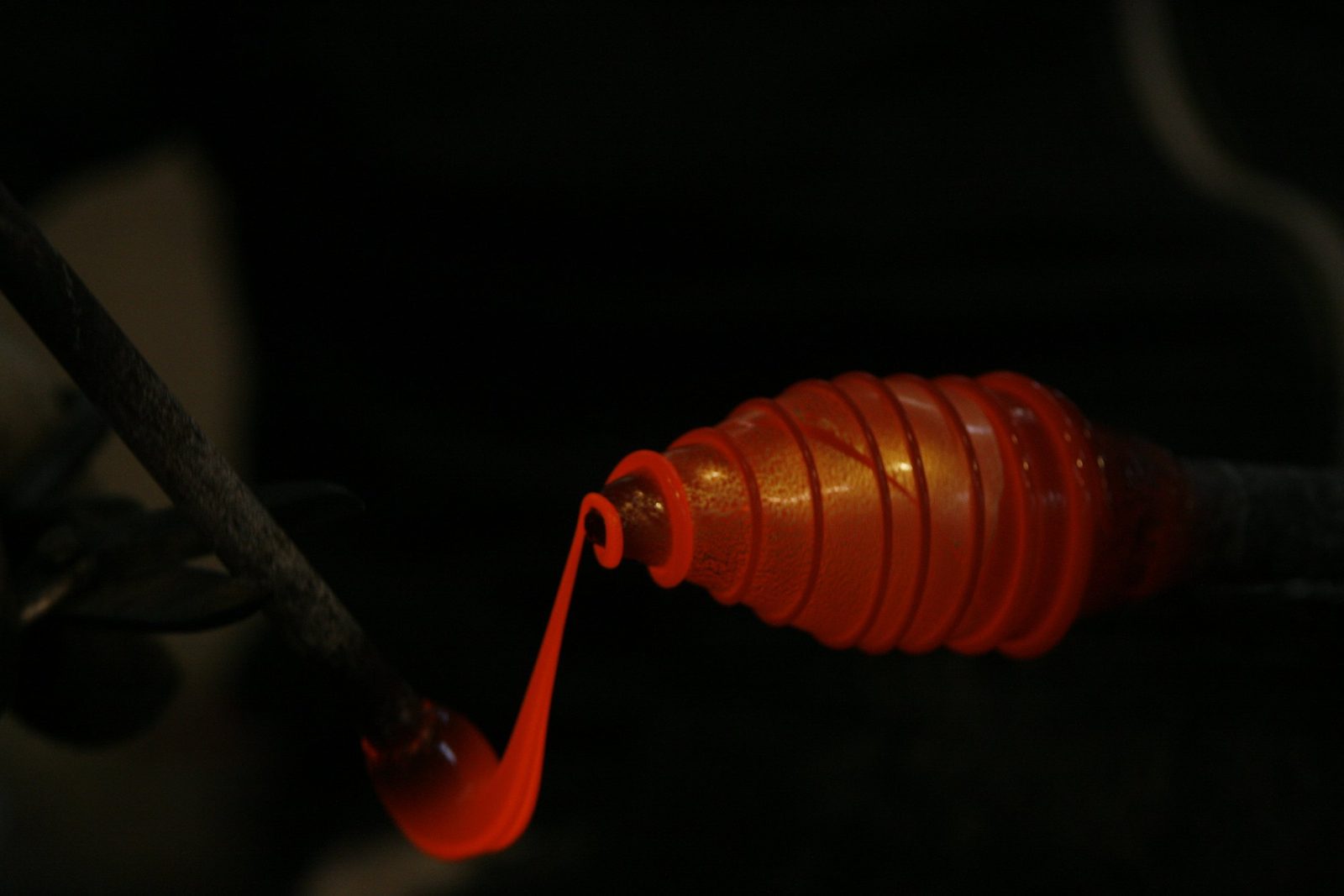
The glass goes into the furnace
Once the order is confirmed, the glass is blown and shaped while hot. We keep you updated during production, with photos from the workshop when useful.
In the furnace · the time stated in the proposal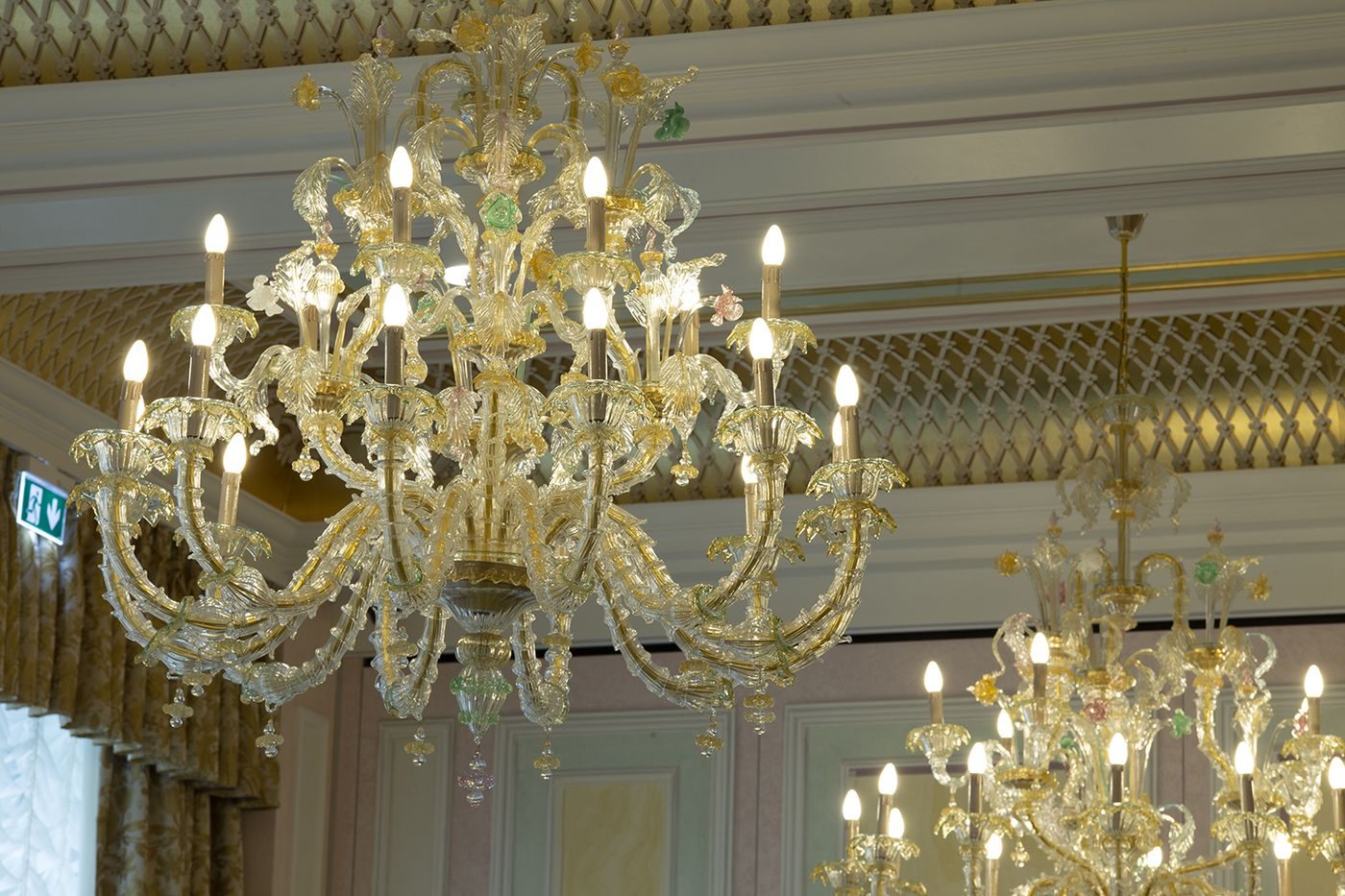
The light comes on
Made-to-measure packing, every piece of glass numbered, assembly instructions; on request we assist the installer or step in ourselves.
At your homeFrom the furnace, to the projects.
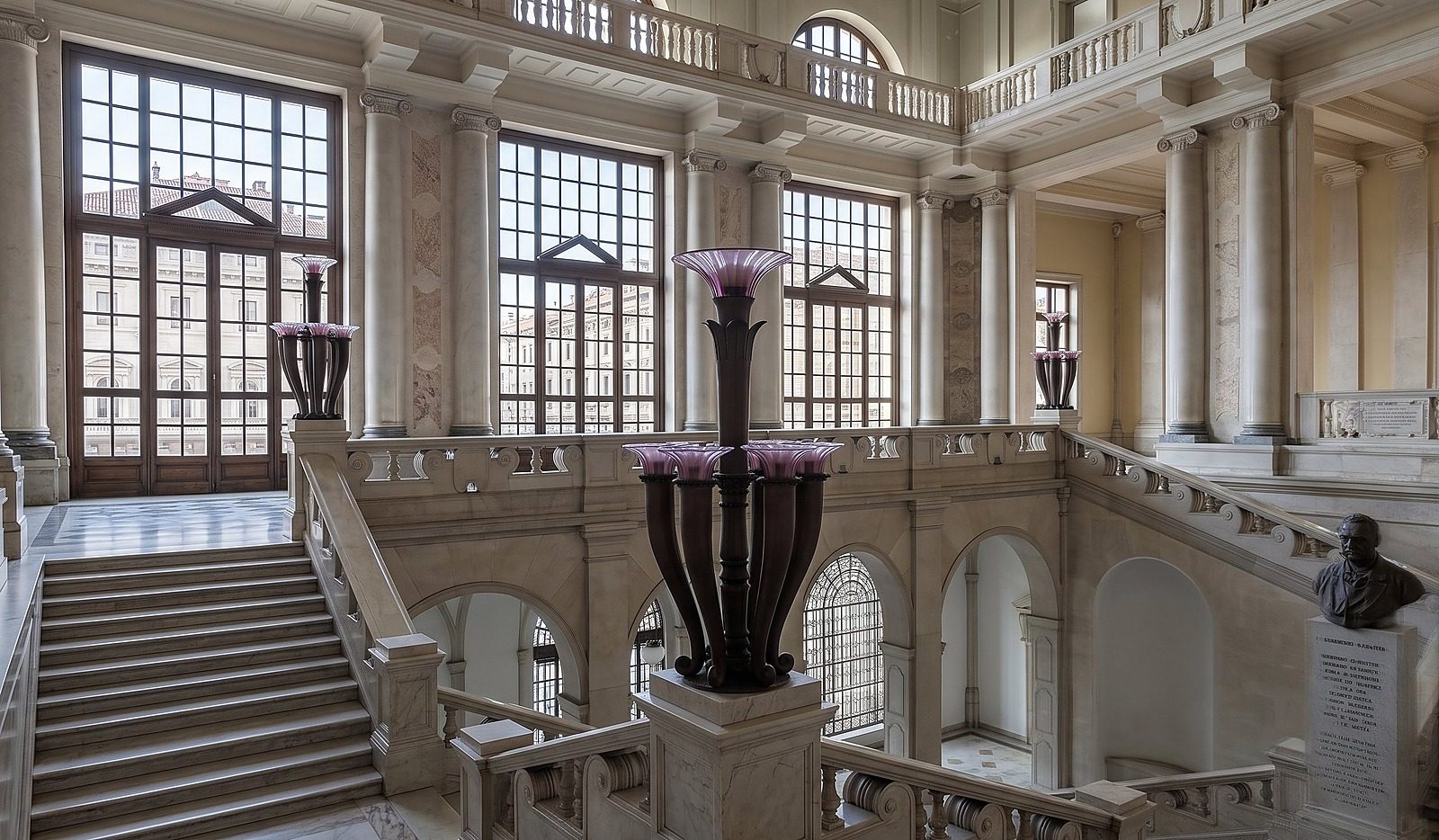
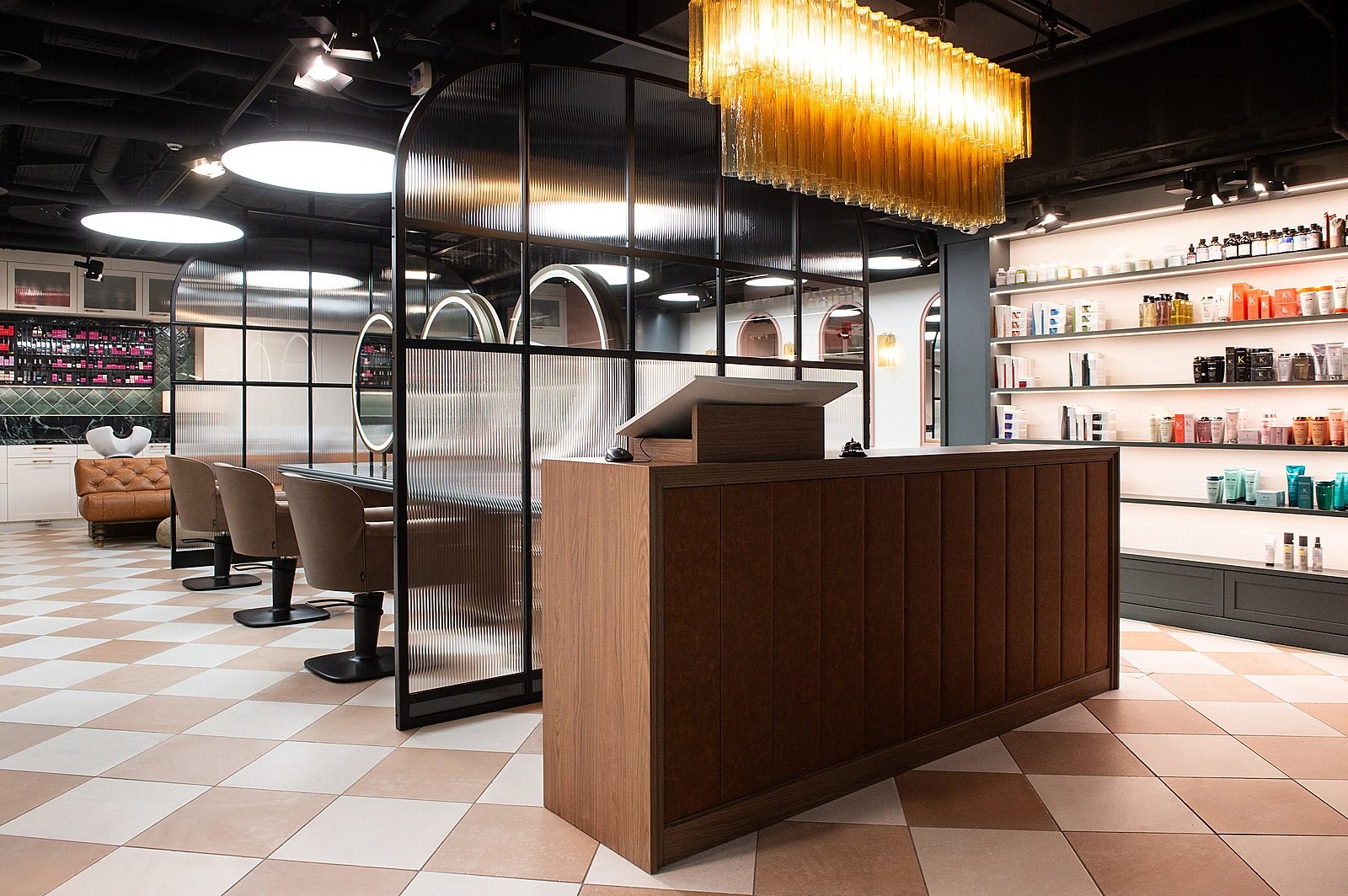
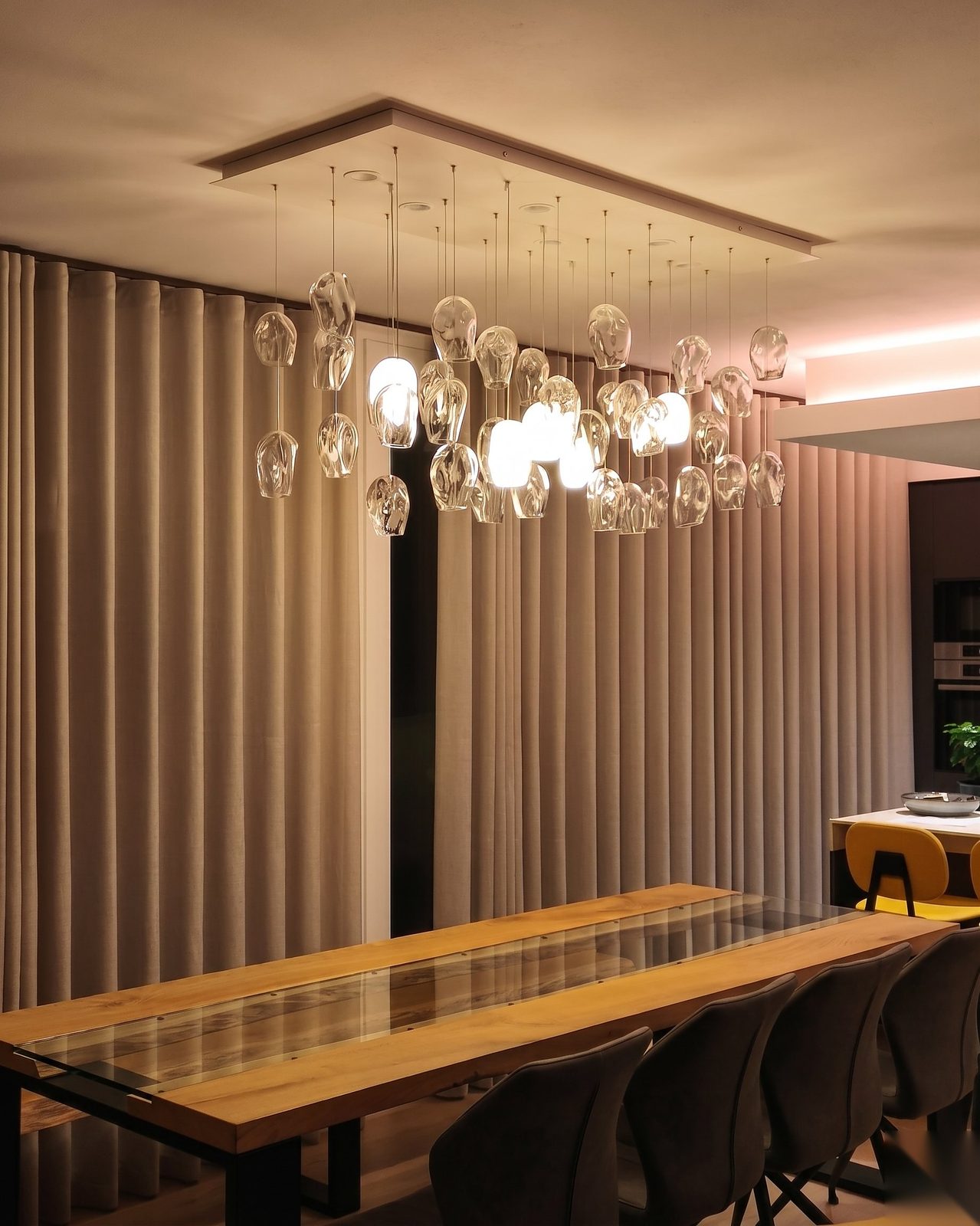
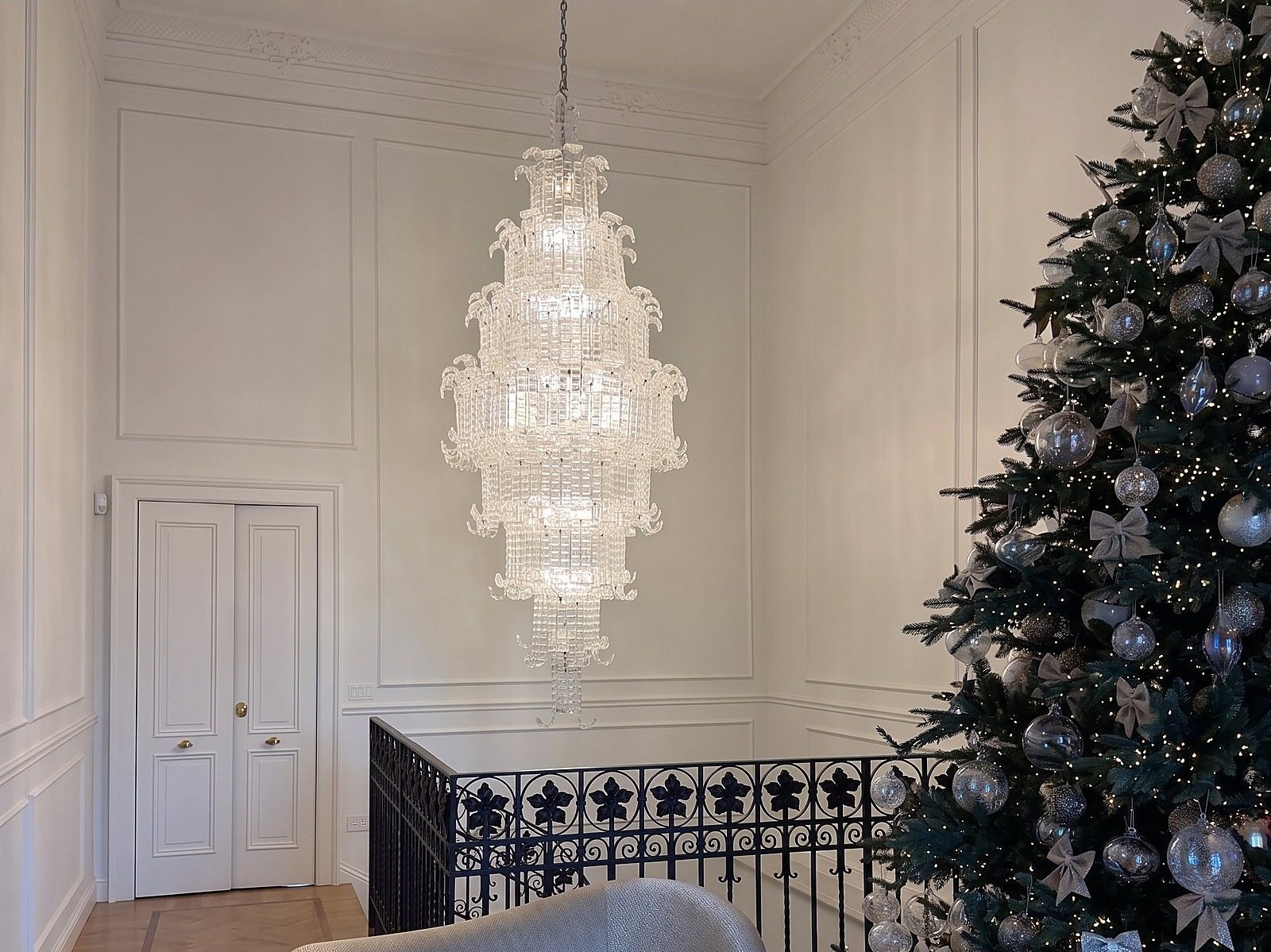
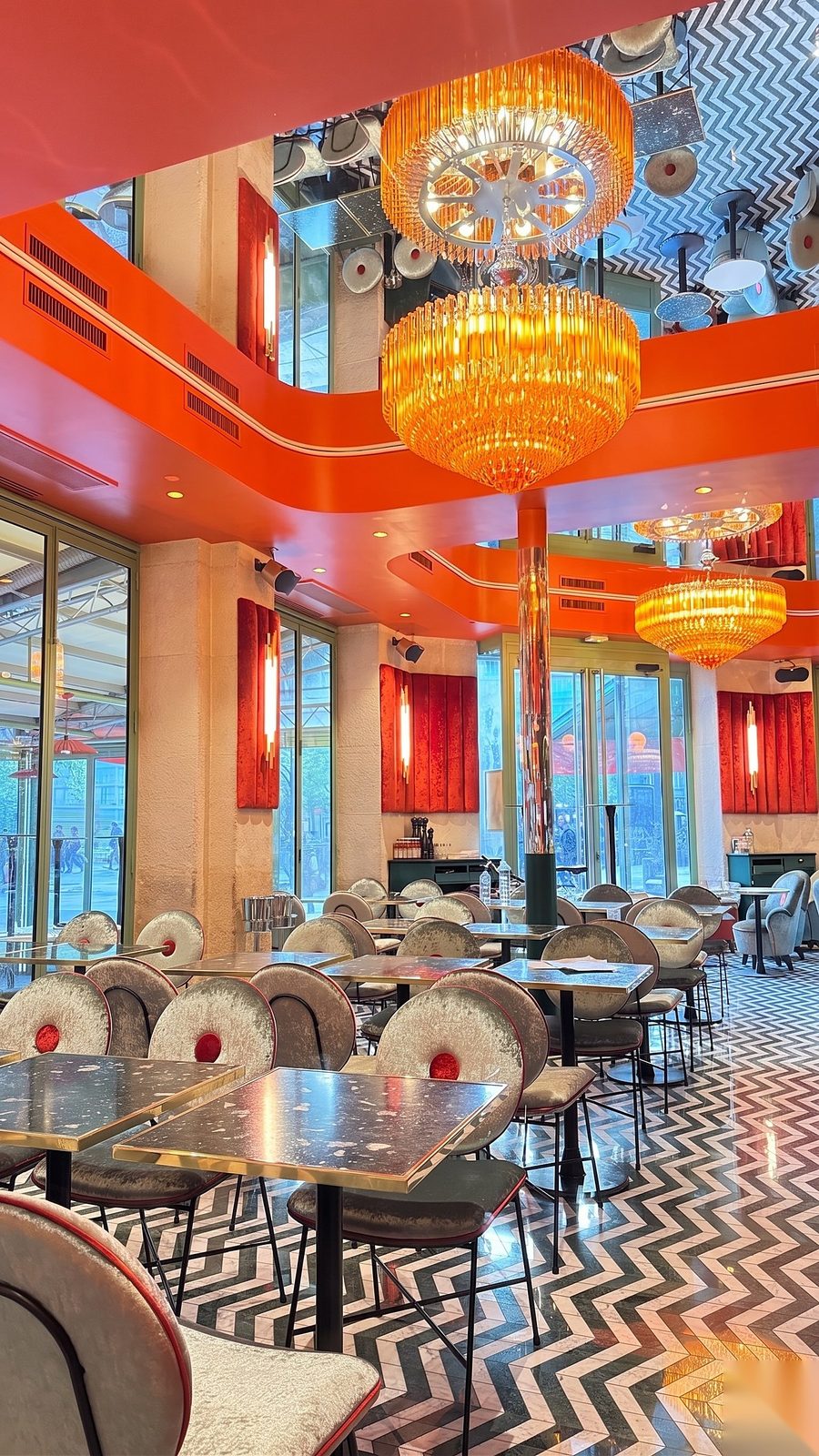
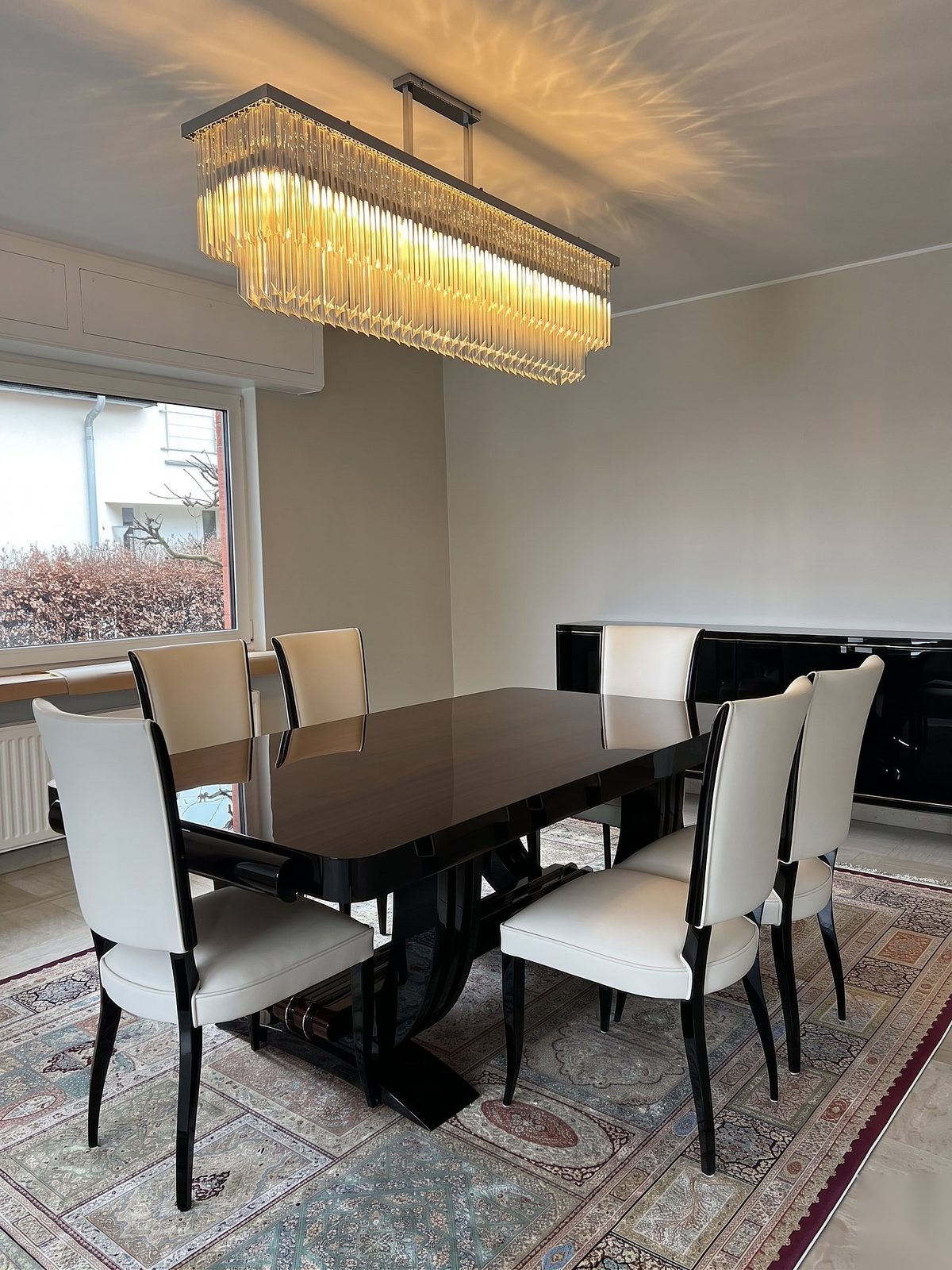
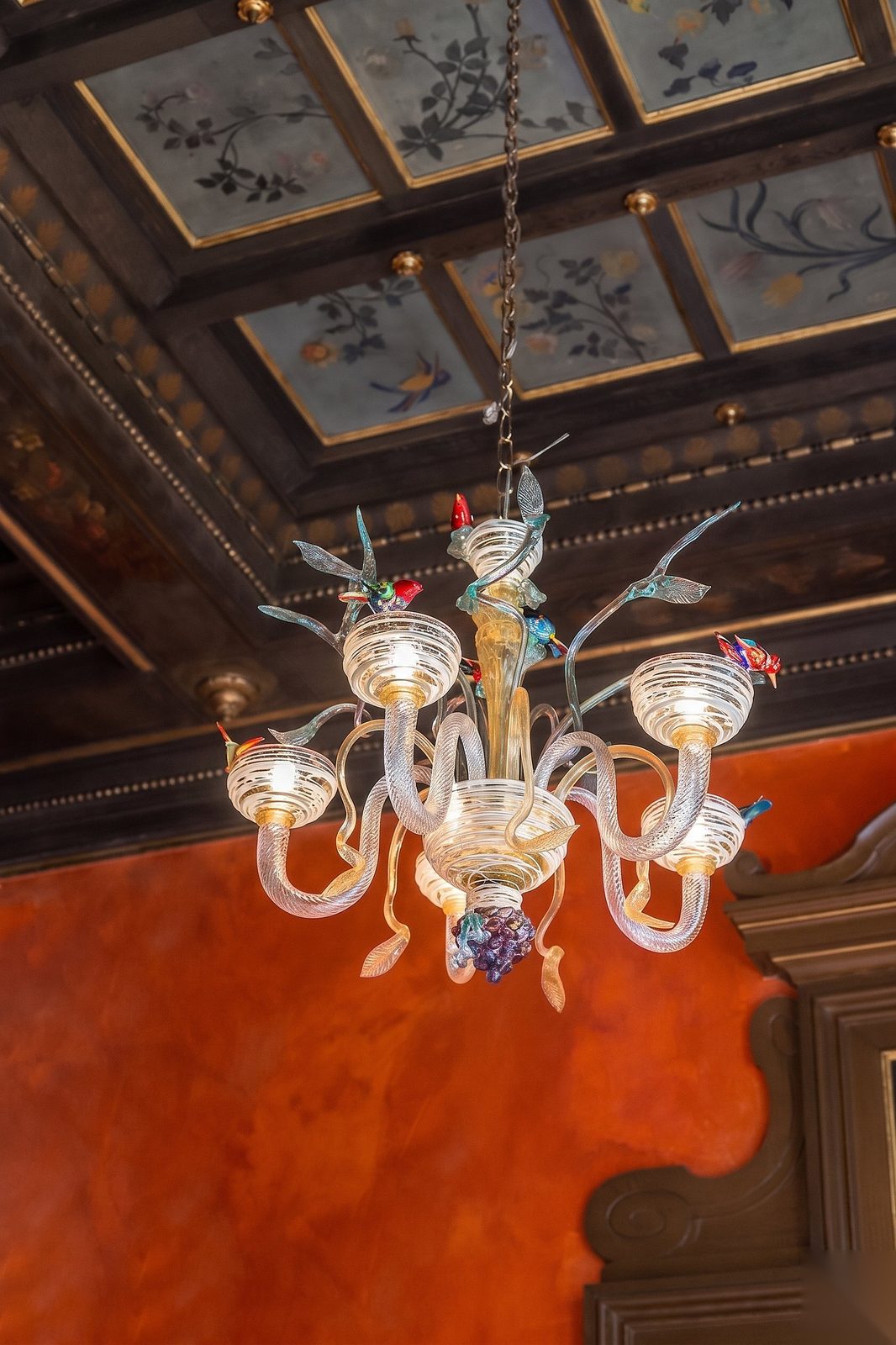
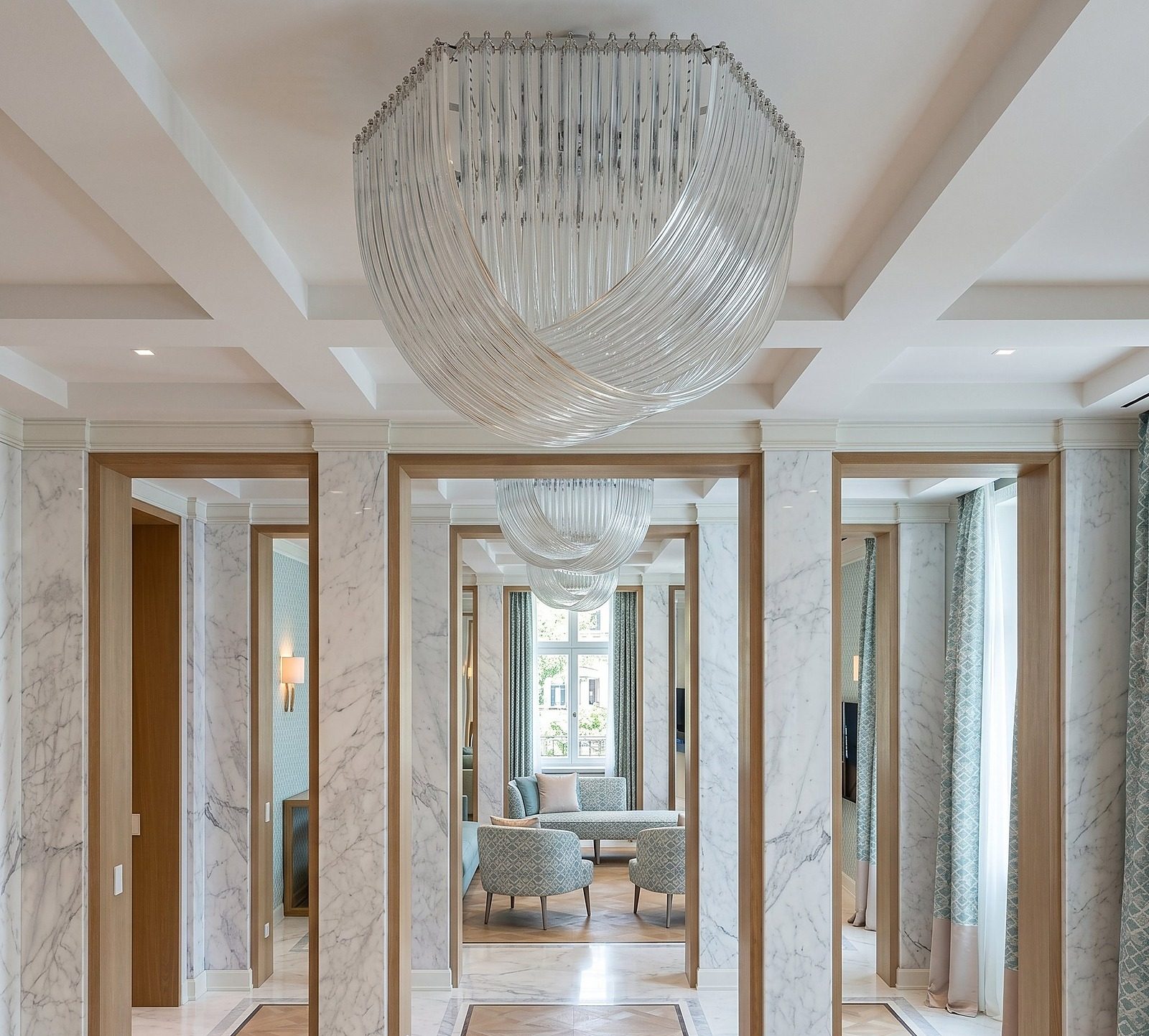
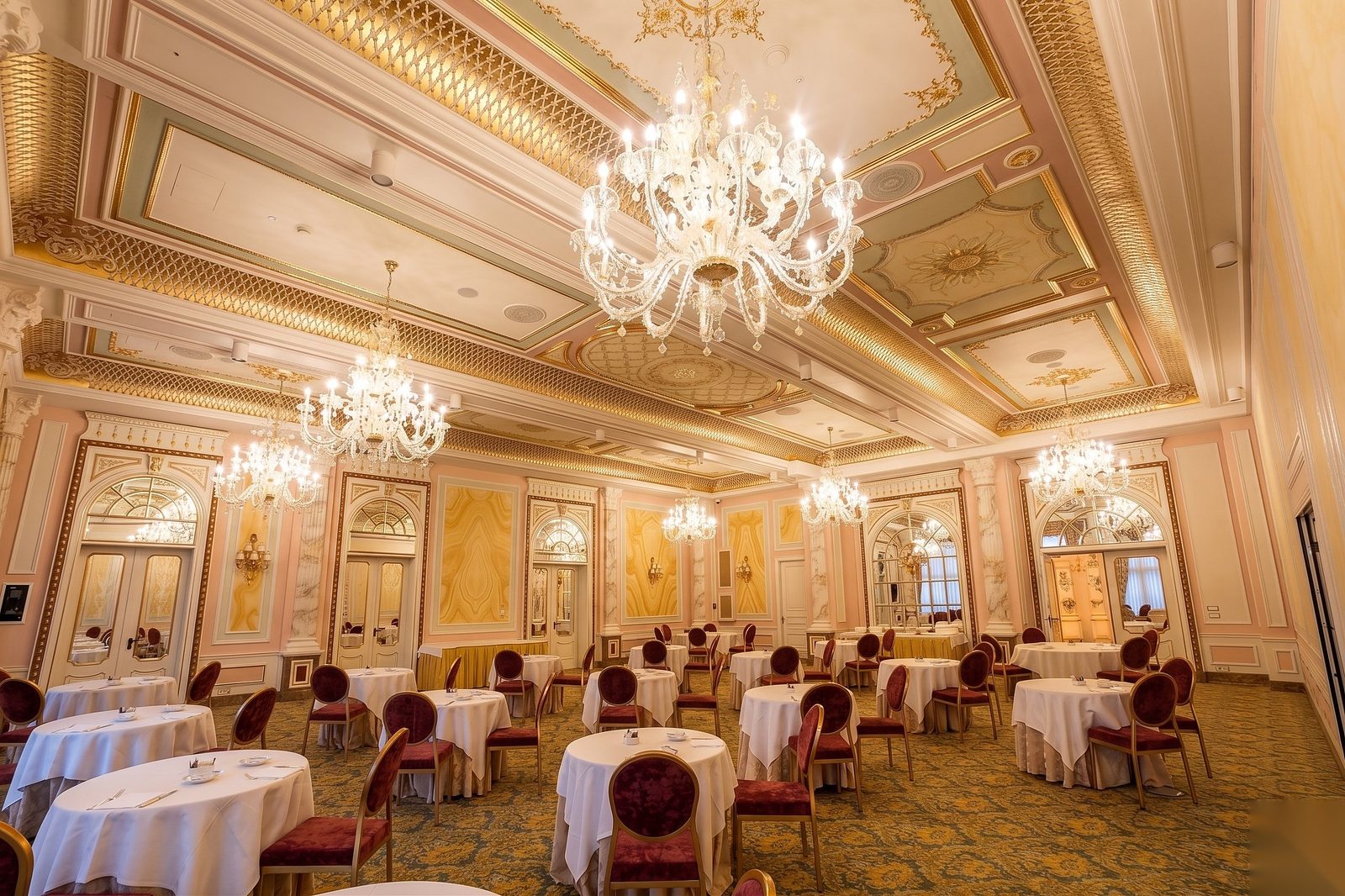
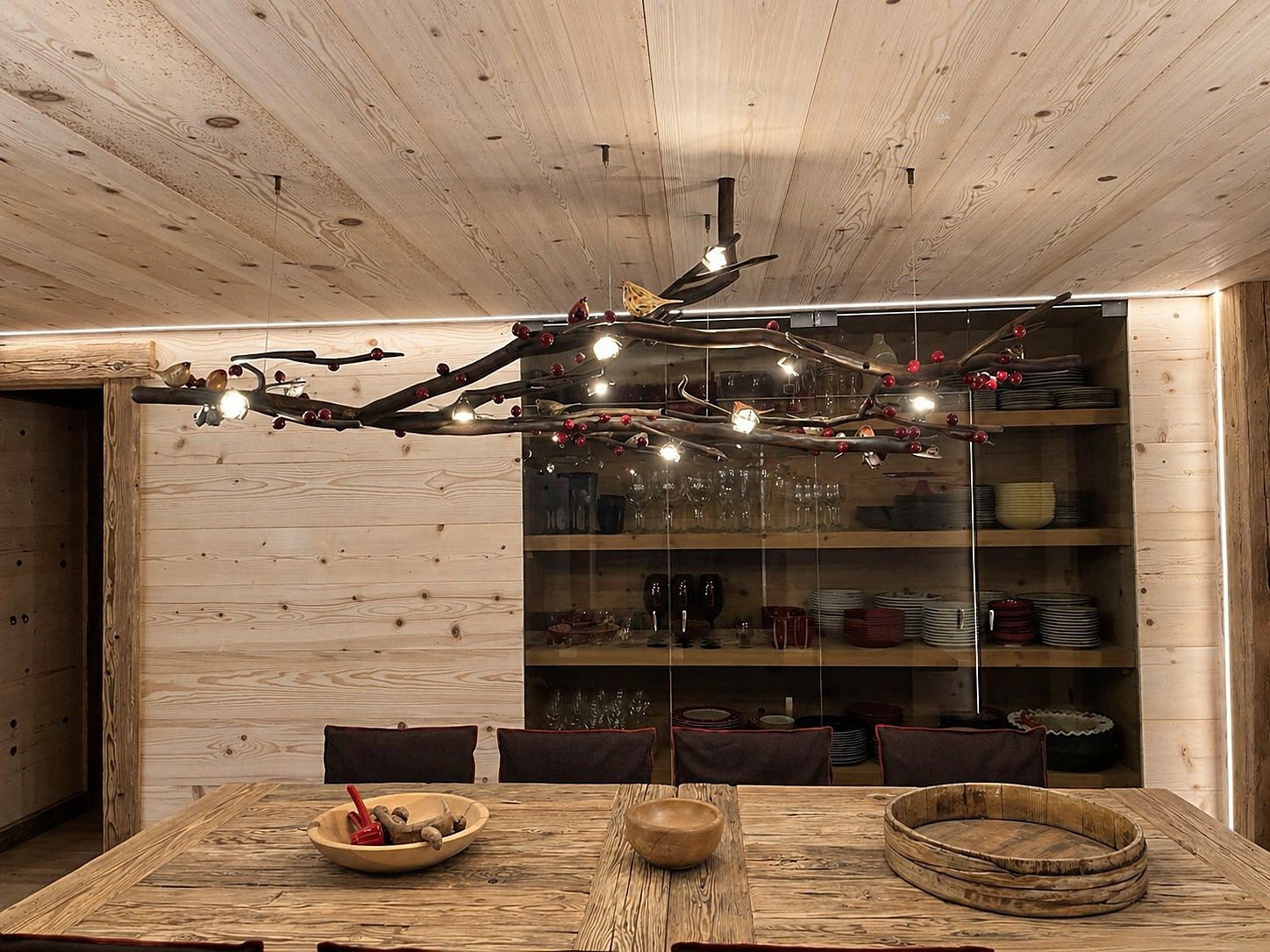
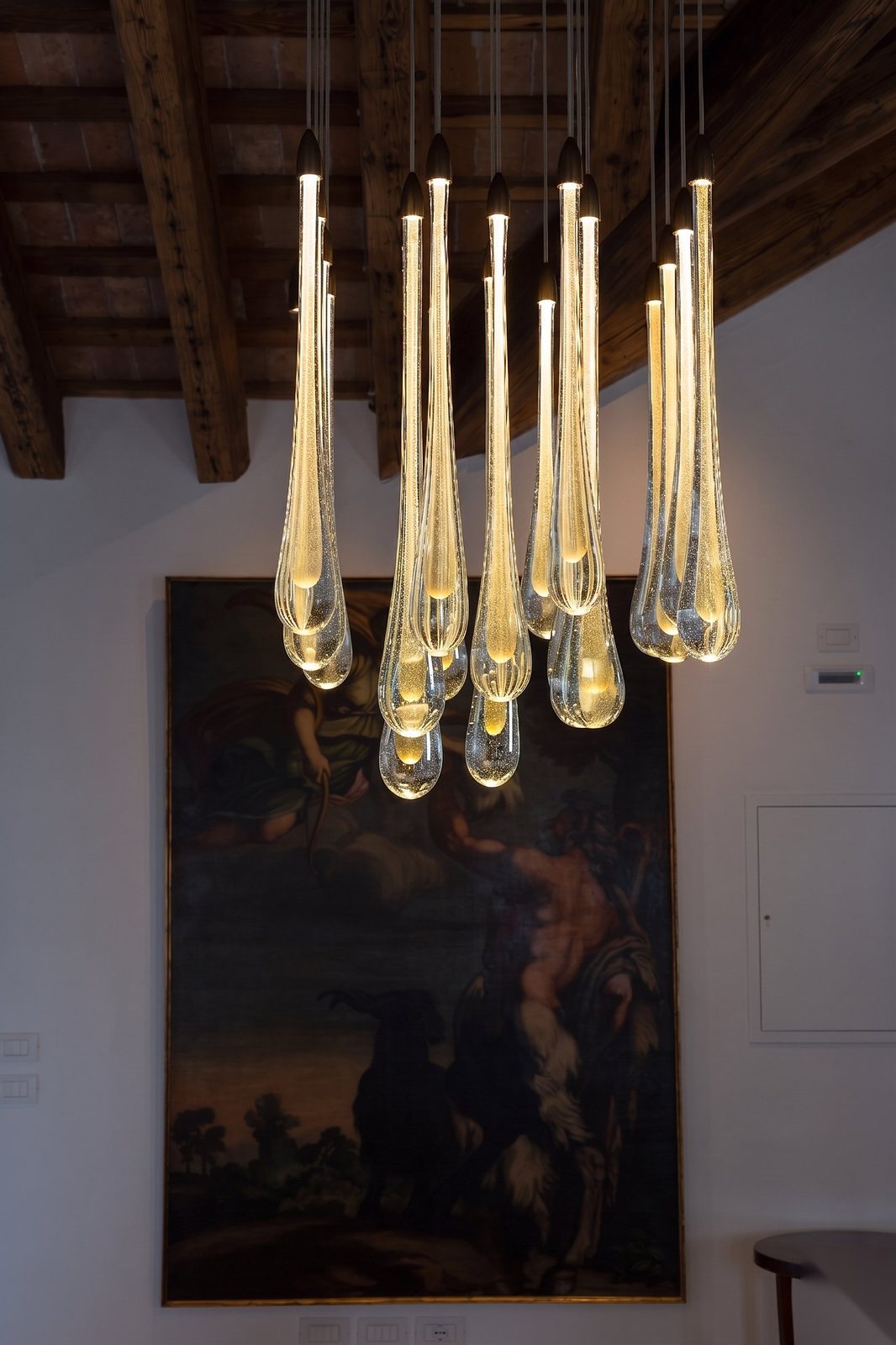
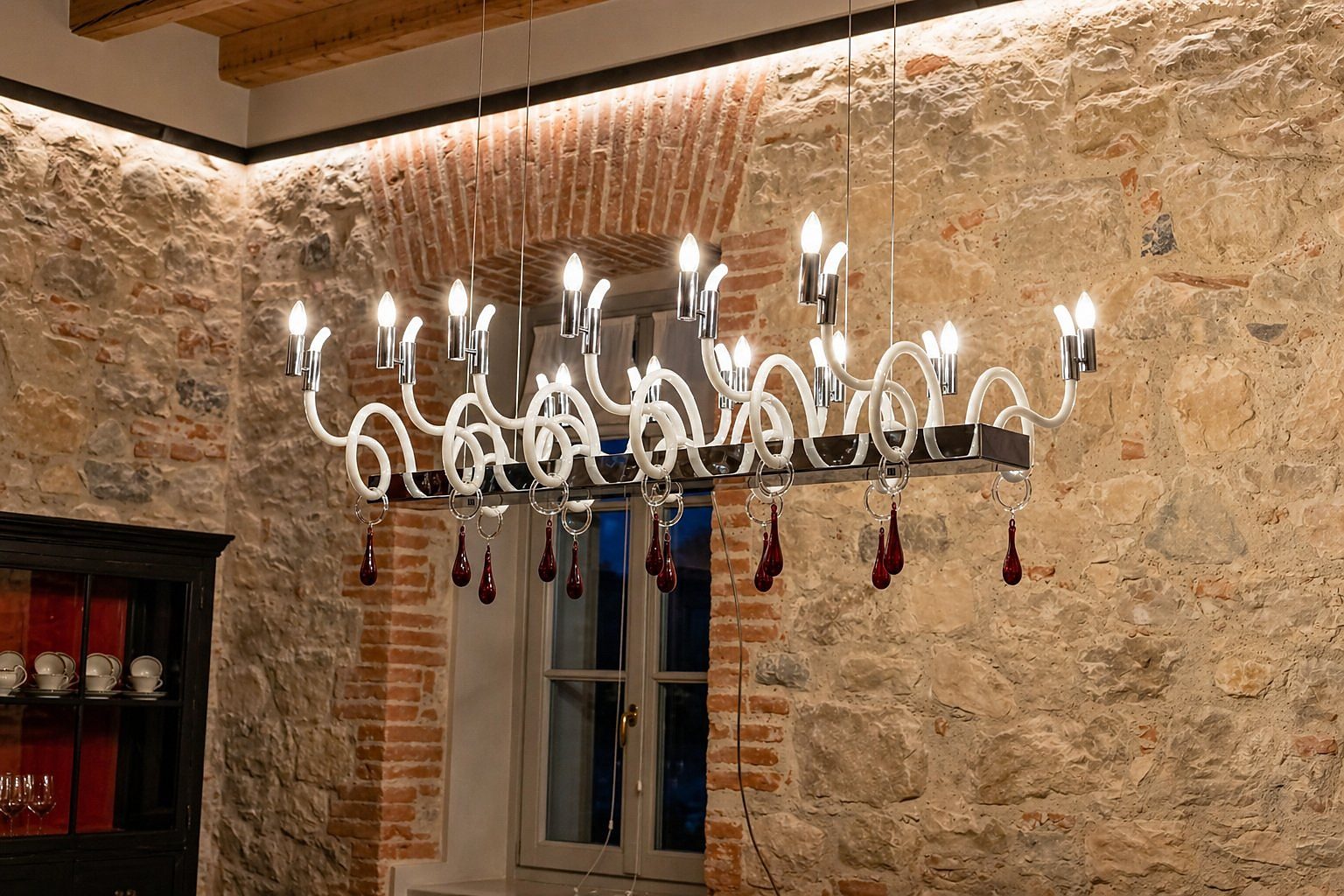
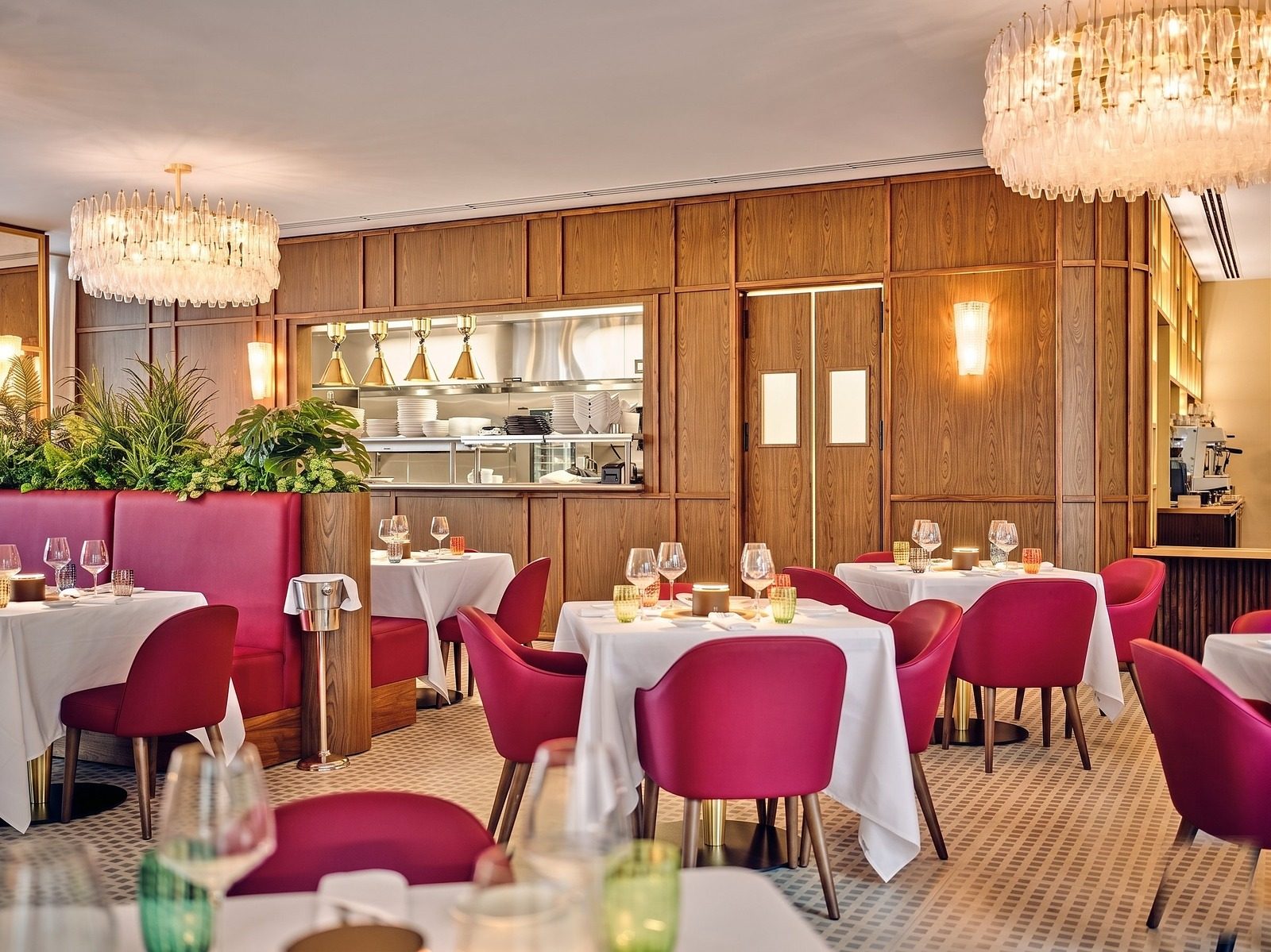
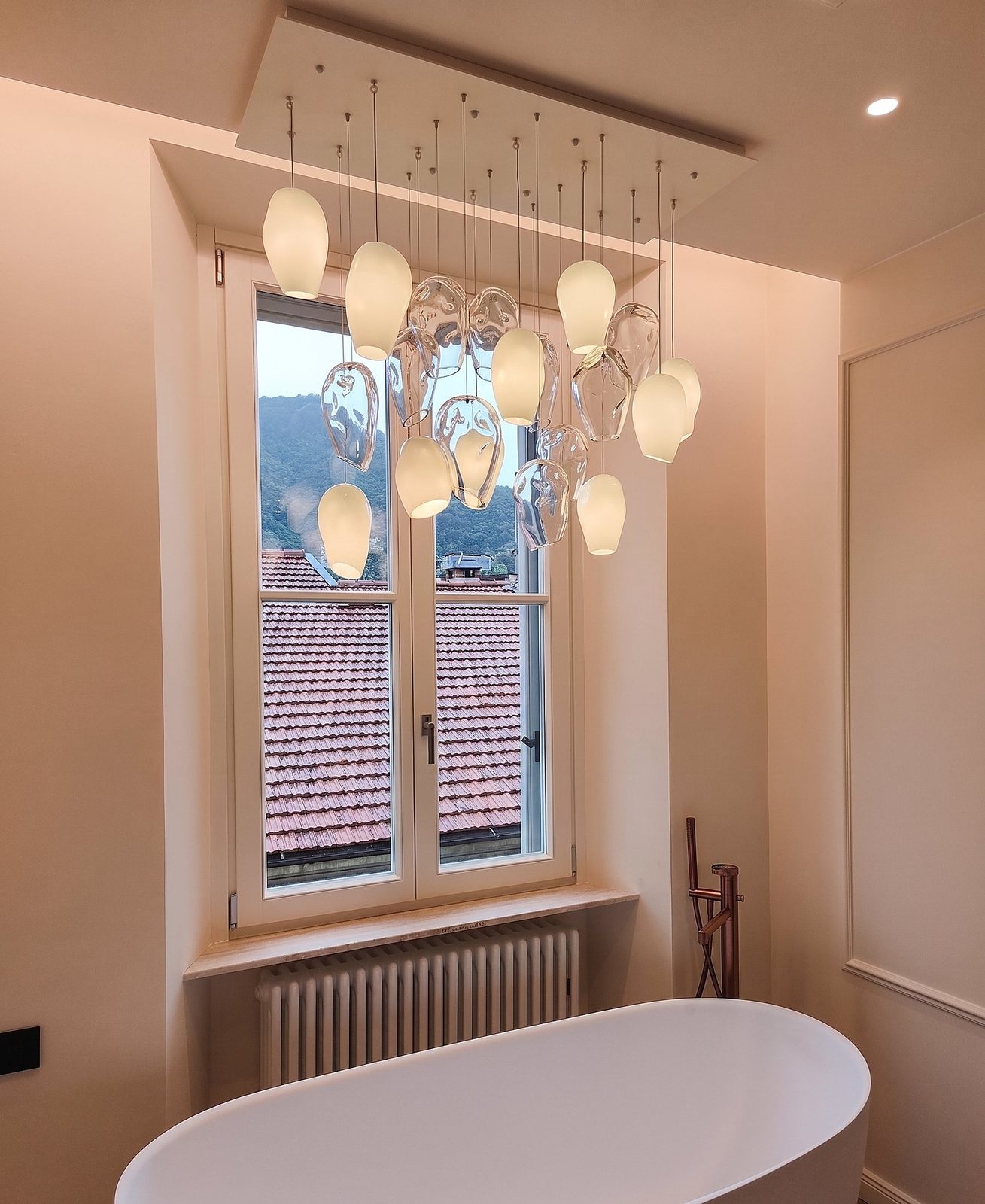
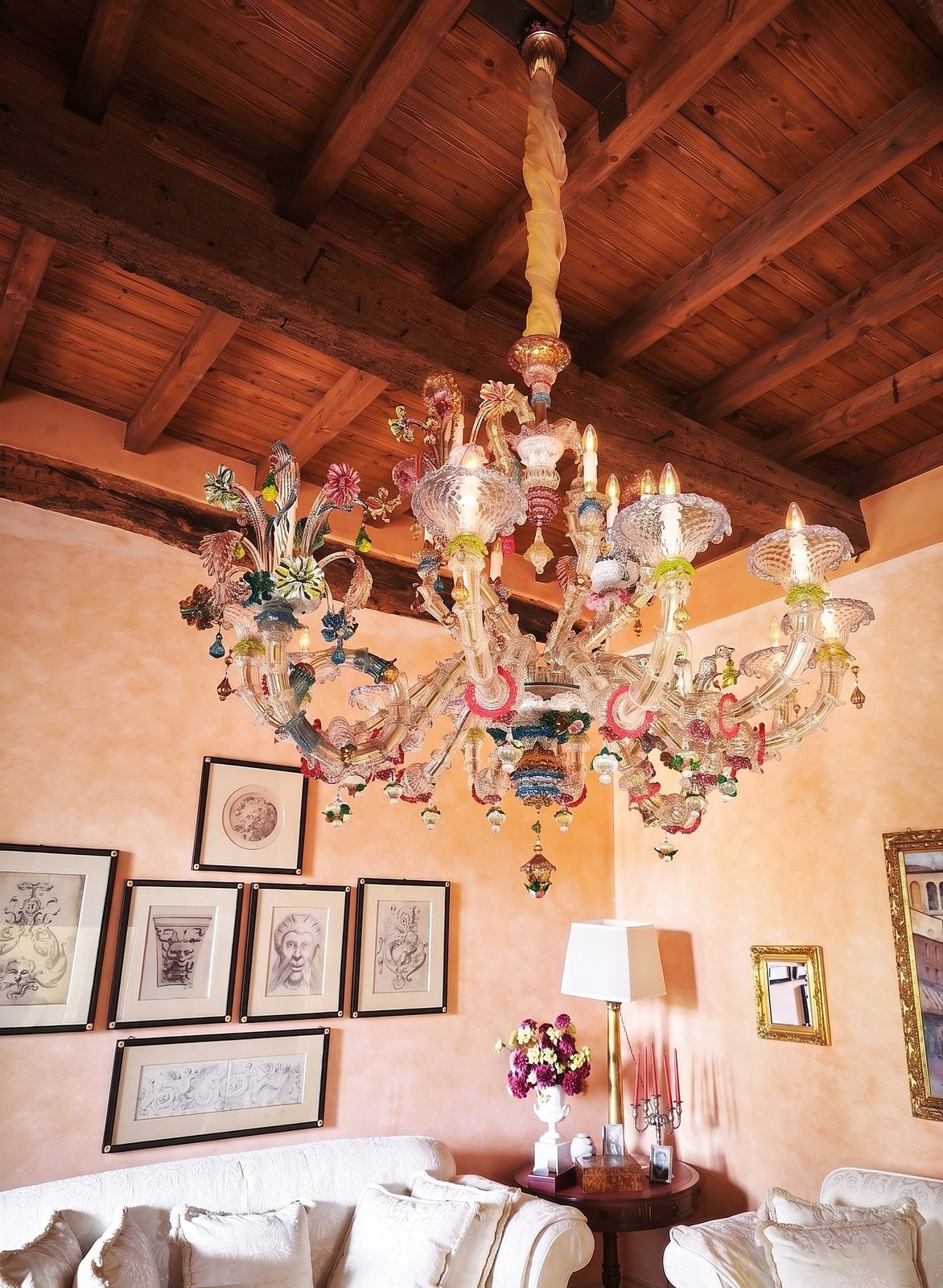
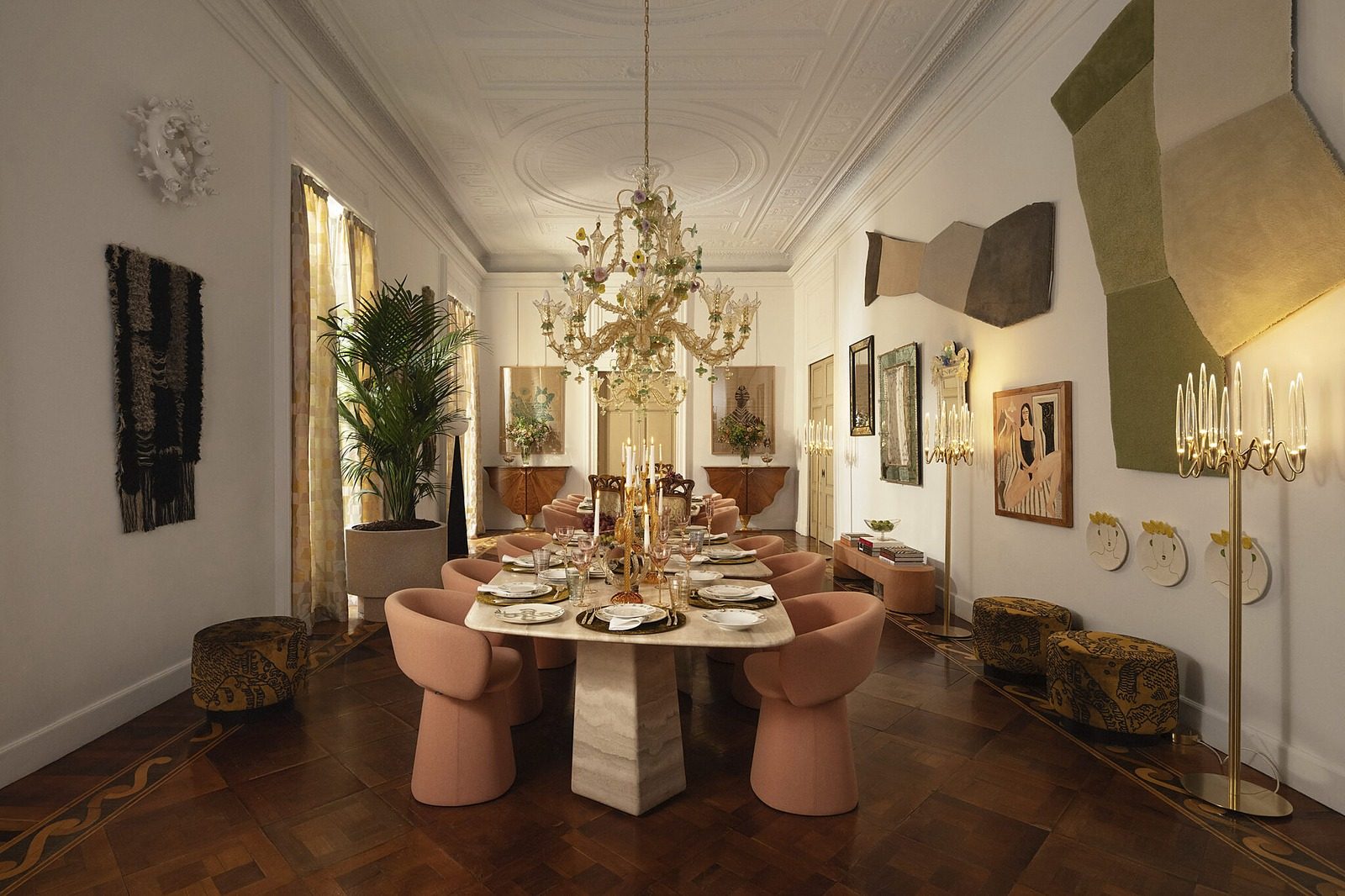
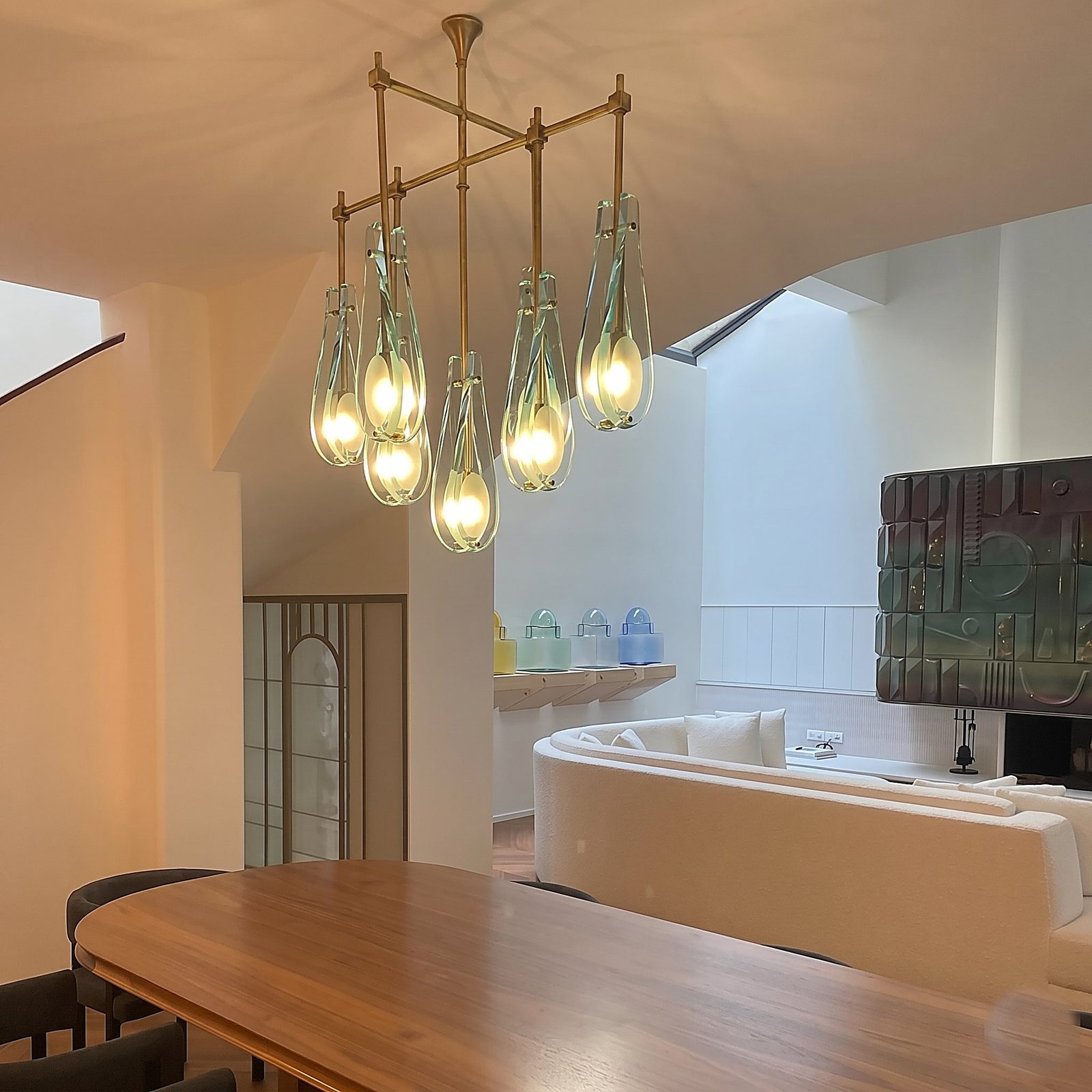
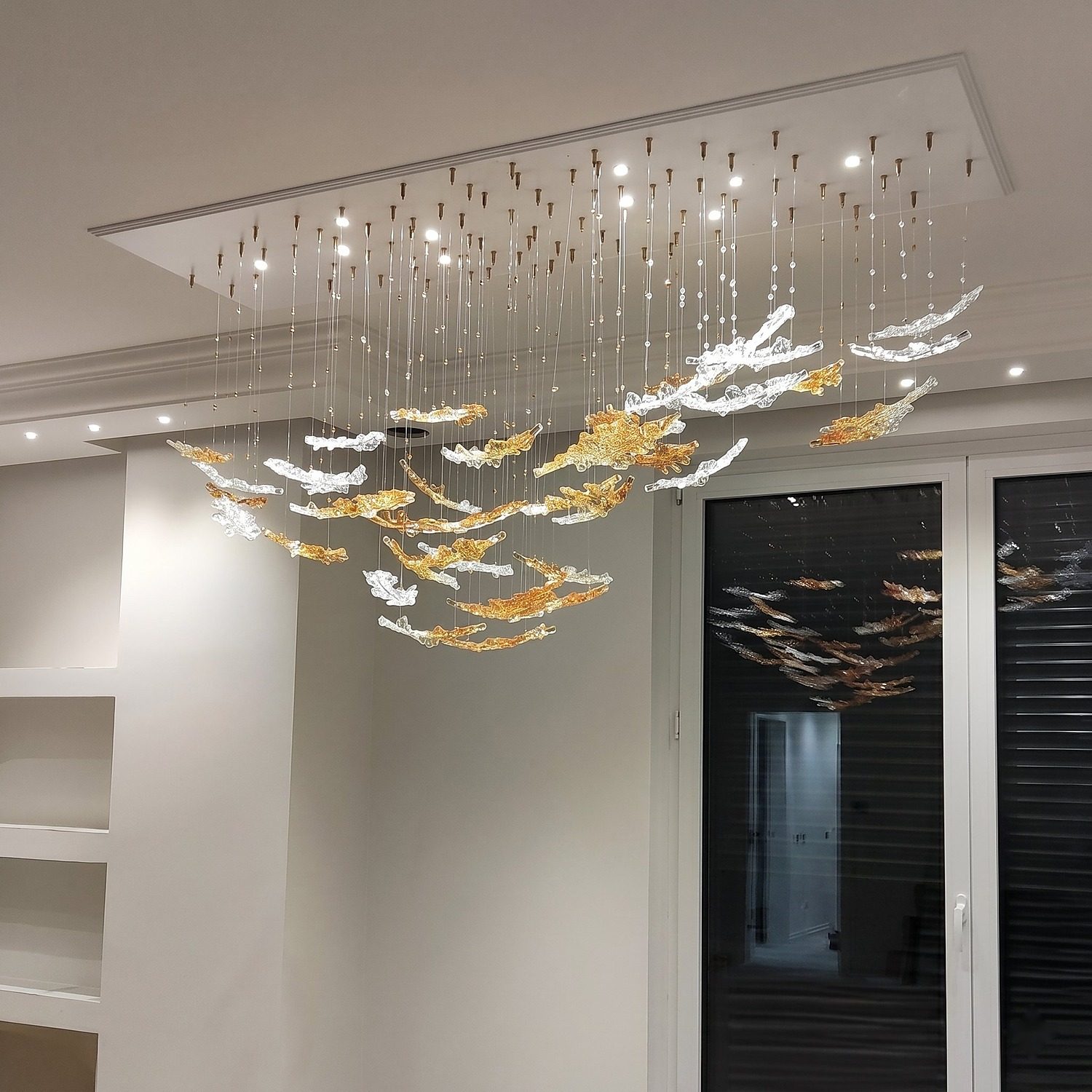
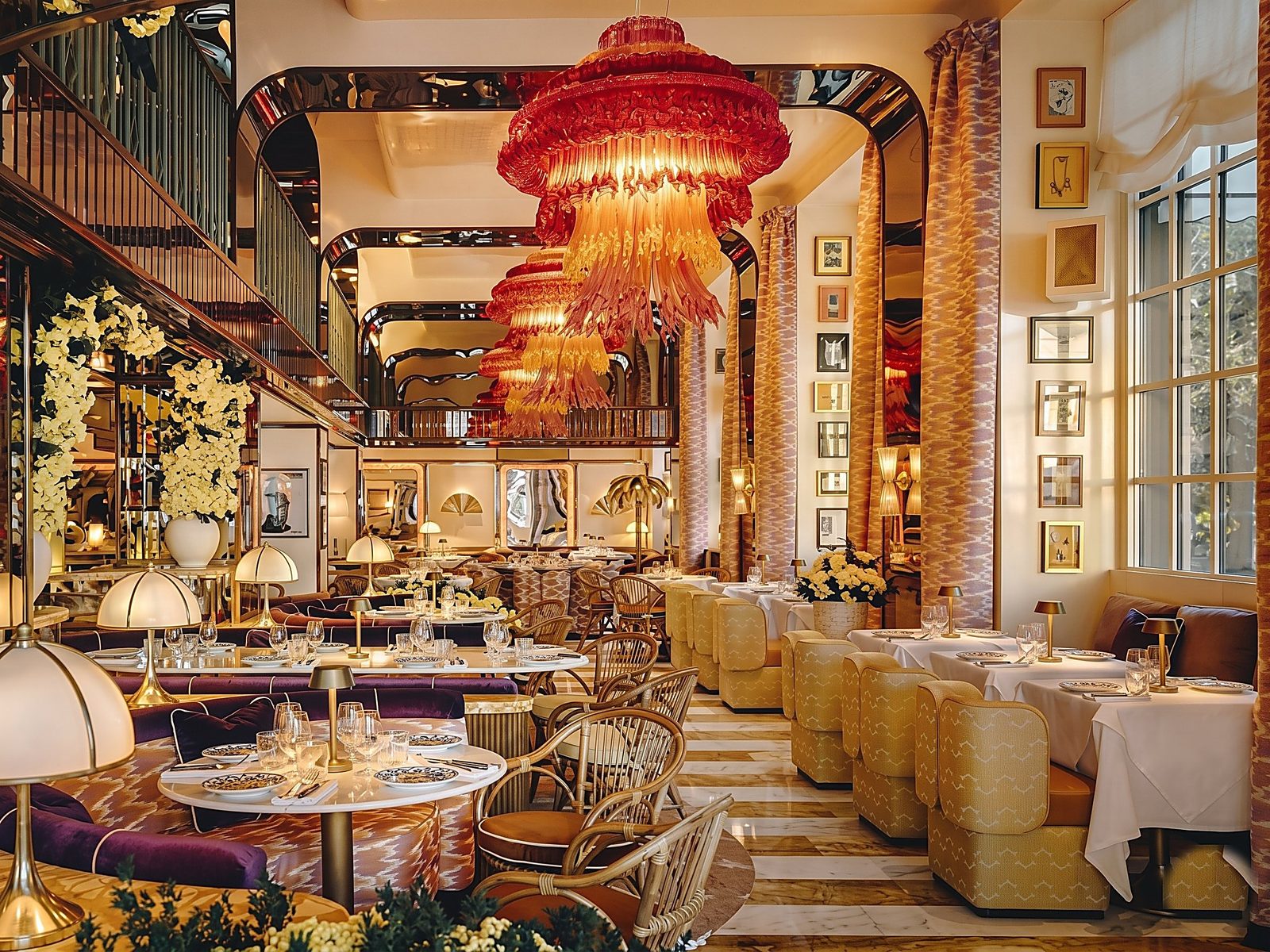
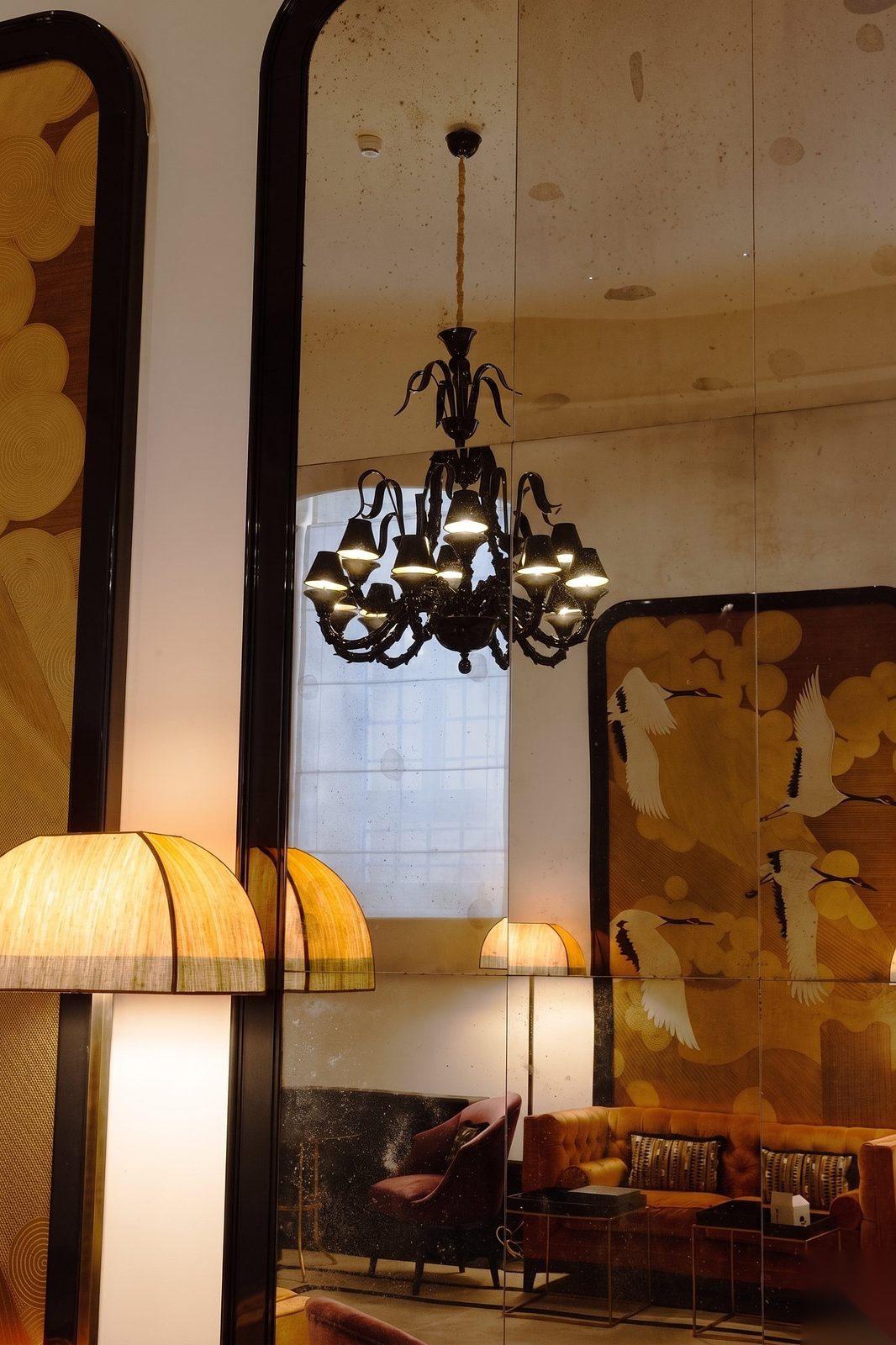
Fifty-two projects, from Venice to the world. Some of them, by city.




What people ask before ordering.
What is the difference between hot-blown and moulded glass?
Moulded glass is made in a mould, in series, and every piece is identical. Hot-blown and hand-shaped glass is worked element by element: two arms of the same chandelier are similar but never the same, the clarity is livelier and the light behaves differently. It is the difference between a product and a creation.
How long does it take to make a chandelier?
It depends on the model, the number of lights and the colours. Production times are stated in the proposal, together with the price, and run from order confirmation.
Do you make bespoke pieces?
Yes, it is how we work: every catalogue model can change size, number of lights, colours and metal finish to suit the space. We start from your request and reply with a proposal and production times.
Can I choose the colours in person?
Yes. For architects, interior designers and retailers we provide glass and finish samples; they can be seen at the furnace by appointment. On the website you will find every shade photographed one by one.
How is a Murano glass chandelier shipped?
With hand-made packing from our workshop and, for the most delicate or intercontinental shipments, in a wooden crate. We ship worldwide with export documentation and assembly instructions; every piece of glass is numbered to make installation easier.
Do you provide installation?
We provide detailed assembly instructions and remote support to the installer; on request, for the most complex projects, our own staff steps in directly.
How do you clean a Murano glass chandelier?
With a soft dry cloth, or one lightly dampened with water and a few drops of neutral detergent, with the light off and cold. No alcohol or abrasive products on gilded parts or metal finishes. Every creation leaves with its own care instructions.
Do you work with architects and retailers?
Yes. We have a Pro area for architecture studios, interior designers, contract and retailers, with samples, technical documentation and reserved terms.
The next light could be yours.
One request, one proposal with price and timing, and your creation goes into the furnace.